Payment security is not just an encrypted checkout page. It's the full chain of technology, processes, people, and controls protecting a transaction from the moment someone taps a card through authorization, settlement, reconciliation, and reporting. Weaken one link in that chain, and the whole system is only as strong as its weakest point.
This guide breaks down what makes a payment system secure, how to weigh different payment methods, what to look for in a provider, and where self-service kiosks fit into public-sector bill collection.
Key Takeaways
- Layer encryption, tokenization, authentication, fraud monitoring, EMV, and PCI DSS—no single control secures payments alone.
- The safest payment method depends on transaction size, channel, and reconciliation strength.
- Agencies must balance security with accessibility, integrations, uptime, and reconciliation accuracy.
- Purpose-built self-service kiosks extend payment access and cut counter workload in bill-payment settings.
What Is a Secure Payment System?
A secure payment system is the combination of technology, infrastructure, policy, and operational discipline that protects payment data and confirms a transaction is legitimate. It is a set of controls working together across the full transaction lifecycle, not a single product on its own.
The typical flow looks like this:
- A payer enters card, bank, or cash details through a website, mobile app, point-of-sale terminal, or self-service kiosk.
- The system encrypts that information and routes it to a gateway, processor, acquiring bank, or payment network.
- The transaction gets authenticated, approved or declined, and settled.
- The payment is recorded for reconciliation and reporting back to the correct account or department.
A fast transaction isn't automatically a secure one. Speed alone does not verify the payer, monitor risk, or leave an auditable trail. Security does.
Public-sector payment environments add their own constraints:
- Multiple departments sharing the same infrastructure
- Property and account identifiers that must match tax or utility records
- Cash acceptance and public accessibility requirements
- Reconciliation that must hold up under audit
Layered security keeps one failed control from exposing the whole transaction. The stack typically includes encryption, tokenization, EMV, authentication, fraud detection, access controls, compliance checks, and ongoing monitoring.

Compliance certification is a baseline requirement. Agencies still need to evaluate how a provider handles incidents, ships software updates, supports integrations, and maintains physical equipment.
Core Components of a Secure Payment System
A secure payment environment is built from several distinct layers. Each one addresses a different kind of failure, and skipping any of them leaves a gap.
Encryption and Secure Transmission
Encryption converts readable payment data into an unreadable format, both while it's moving (data in transit) and while it's stored (data at rest). For online and kiosk payments, that means TLS/HTTPS between the payer's device and the gateway, plus encrypted links between kiosks, terminals, processors, and internal systems.
NIST's federal server guidelines require government-facing application servers to use TLS 1.2 at minimum, recommend TLS 1.3, and prohibit TLS 1.0 entirely. That's a transport standard, separate from PCI DSS requirements around protecting stored account numbers. Agencies need both.
Tokenization and Data Minimization
Tokenization swaps card or account numbers for a token with no usable value outside the approved payment environment. This can reduce how much sensitive data an agency stores or handles, which may narrow the scope of its PCI DSS assessment.
It's a real benefit, but not a shortcut. PCI Security Standards Council guidance is clear that a token doesn't automatically remove connected systems, or a token vault, from PCI DSS scope. Ask whether any of the agency's own systems ever touch the raw account number, and who controls detokenization access. Tokenization pairs well with:
- Recurring or scheduled payments
- Saved payment profiles
- Account lookup features in integrated bill-payment portals
Payment Gateways, Processors, and Secure Integrations
A payment gateway, processor, acquiring institution, and issuing bank each play a different role. The gateway routes payment data and returns authorization responses. The processor moves funds. The acquirer holds the merchant relationship. The issuer represents the payer's bank.
A secure gateway keeps raw card data away from the agency's internal systems entirely. For integrations, agencies typically choose from:
- Real-time connections: instant posting to billing or treasury systems
- File-based processing: batch updates, useful for high-volume, lower-urgency reconciliation
- Non-validated workflows: simpler setups where account matching happens after the fact
The right choice depends on transaction volume and how quickly a department needs posted records.
Authentication and Authorization Controls
Authentication confirms identity before money moves or sensitive activity happens. Methods include MFA, PINs, biometrics, device verification, and risk-based authentication that adjusts scrutiny based on transaction context.
Customer-facing authentication and internal administrator controls are two different problems. Staff accounts need role-based access, least-privilege permissions, and strong login requirements.
NIST's 2025 digital identity guidance recommends selecting authentication requirements based on assessed risk rather than applying one blanket rule everywhere. PCI's own FAQs also note that phishing-resistant methods alone don't satisfy MFA requirements without an added factor.
EMV, Contactless Payments, and Secure Physical Hardware
EMV chip transactions generate a unique, one-time cryptogram for each purchase, so a captured chip transaction can't be replayed the way a cloned magnetic stripe can. Contactless payments, including tap cards and mobile wallets, use similar dynamic data.
For kiosks and in-person terminals, hardware security matters just as much as network security. That includes:
- Tamper-evident and tamper-resistant card readers
- Privacy shields around screens and keypads
- Routine physical inspection procedures
- Hardened, locked enclosures for cash and components
Fraud Detection, Monitoring, and Incident Response
Fraud systems look at transaction patterns, velocity, unusual amounts, and device or account signals to flag suspicious activity before it settles. Attempted fraud is not rare.
A 2025 AFP survey of over 500 corporate practitioners found 79% of organizations reported attempted or actual payments fraud in 2024, including 63% involving checks.
That figure is an organizational benchmark, not a government-specific rate. Still, it supports real-time alerts, audit logs, exception review, and a documented incident-response plan rather than relying on encryption alone.
PCI DSS Compliance and Provider Accountability
PCI DSS governs any environment where cardholder data is stored, processed, or transmitted. The current active version is PCI DSS v4.0.1. Any organization accepting card payments needs to understand where its own responsibilities begin.
A provider's PCI DSS Level 1 certification covers its own systems. It doesn't automatically cover the agency's devices, staff access, policies, or custom integrations. KIOSK PAY STATION's processing infrastructure is PCI-DSS compliant, PCI DSS Level 1 certified, and EMV certified, but agencies still own decisions about their own network access, employee training, and physical site security.

Reconciliation, Auditability, and Data Integrity
Every payment needs to land against the right account, department, property, or invoice — automatically, not through manual matching. Strong systems provide:
- Automated daily reconciliation and settlement records
- Transaction traceability and exception reporting
- Role-based access to financial reports
- Configurable data capture for account numbers, property IDs, invoice numbers, department codes, QR codes, and barcodes
Secure Payment Methods for Government and Public-Service Organizations
There isn't one universally "safest" payment method. The right choice depends on several operational factors:
- Transaction size and fraud exposure
- How quickly the payment must post or clear
- Processing fees
- Whether staff can reconcile the payment cleanly
| Method | Security notes | Best-fit use cases |
|---|---|---|
| EMV/contactless card | Dynamic cryptogram limits counterfeit-card reuse | Utility bills, court fees, parking payments |
| Digital wallet | Tokenizes card or bank credentials on the device | Mobile-first residents, recurring bills |
| ACH/bank transfer | Requires account verification; return handling matters | Larger tax or utility payments |
| Check/eCheck | Needs manual or automated verification and deposit controls | Traditional mail-in or in-office payments |
| Cash (via controlled kiosk) | Secured by enclosure hardening and exact-change handling | Walk-in payers without card or bank access |
Offering several secure methods widens access, but every channel needs the same baseline controls. Encryption, reconciliation, and audit trails shouldn't vary by payment type.
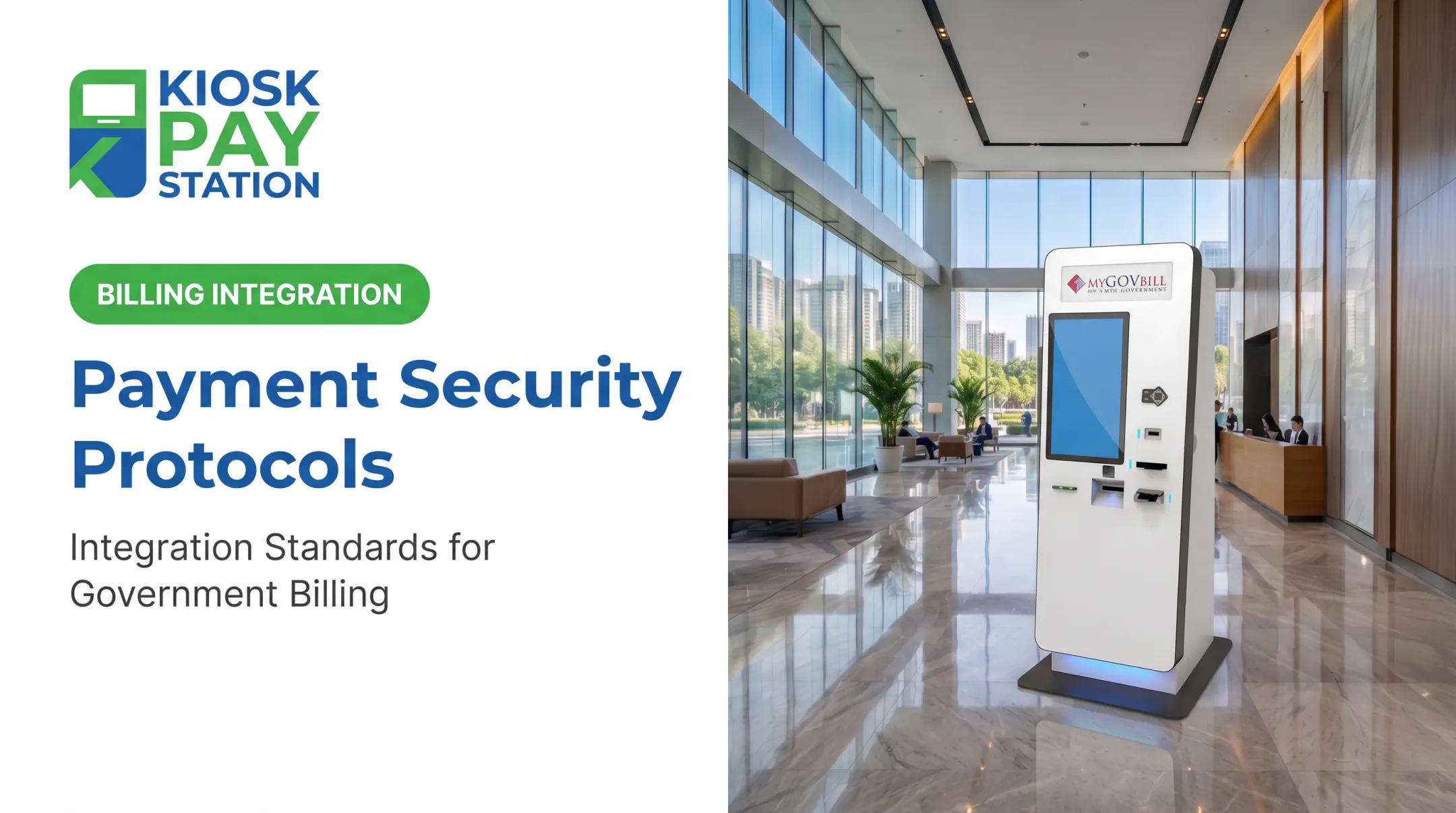
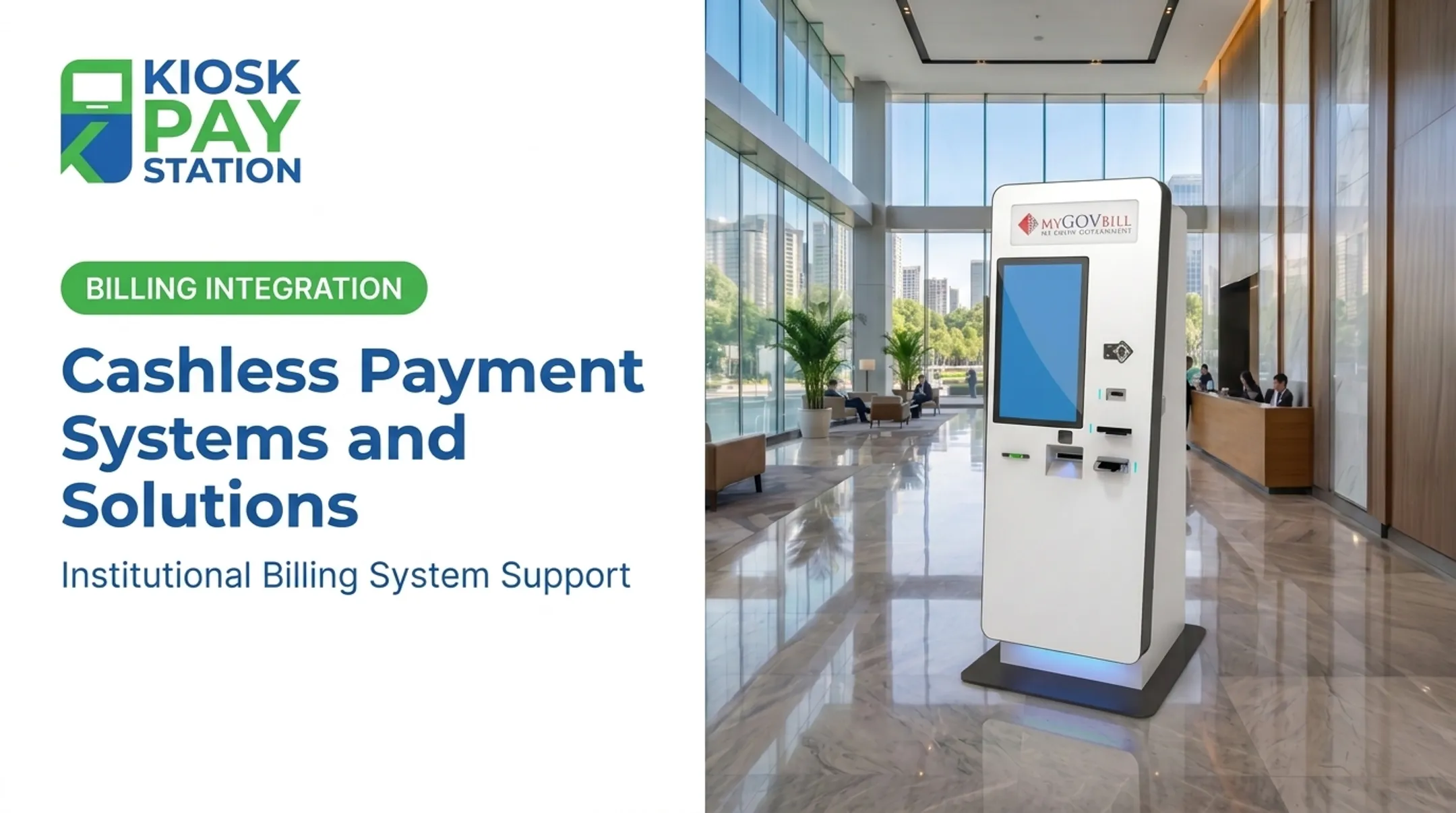
For self-service kiosks specifically, agencies should confirm:
- Encrypted card acceptance and bill/coin handling with exact change
- Receipt generation with a unique transaction ID
- ADA-accessible design and multilingual instructions
- Configurable hours, set by the organization rather than fixed business hours
How to Choose and Implement a Secure Payment Solution
Define Your Requirements First
Map every payment channel, department, user role, and point where data is entered, transmitted, stored, or reported. Before you talk to vendors, document:
- Peak transaction periods and cash-handling needs
- Accessibility and language requirements
- Measurable targets for security, uptime, and reconciliation accuracy
- Total cost of ownership criteria
Vet Security Credentials and Shared Responsibilities
Ask providers for current evidence of PCI DSS status, EMV certification, encryption and tokenization practices, and incident-response procedures. Confirm what stays the agency's responsibility, including employee accounts, physical site access, and staff training. For anything touching legal or compliance obligations specific to the agency, loop in counsel or a compliance reviewer rather than relying on general guidance.
Check Integrations and Data Quality
Confirm the solution connects to billing, tax, treasury, court, or utility systems through real-time, file-based, or other supported methods. Configurable data fields and multiple account-lookup options (invoice number, QR code, barcode, account number) reduce posting errors. Ask how refunds, reversals, and failed transactions are handled.
Test the Customer Experience
Walk through the payment journey for someone paying with cash, card, check, or a digital wallet. Check the experience against these basics:
- ADA-accessible design and large touchscreens
- Voice and visual instructions
- Multilingual options
- Privacy at the point of entry Decide whether kiosks need to run during business hours only or provide extended access based on staffing and security.
Plan Deployment and Ongoing Support
A phased rollout — site assessment, integration testing, transaction testing, staff training, and post-launch review — reduces surprises. Ongoing needs include physical inspections, software updates, component replacement, and uptime monitoring backed by documented service-level expectations.

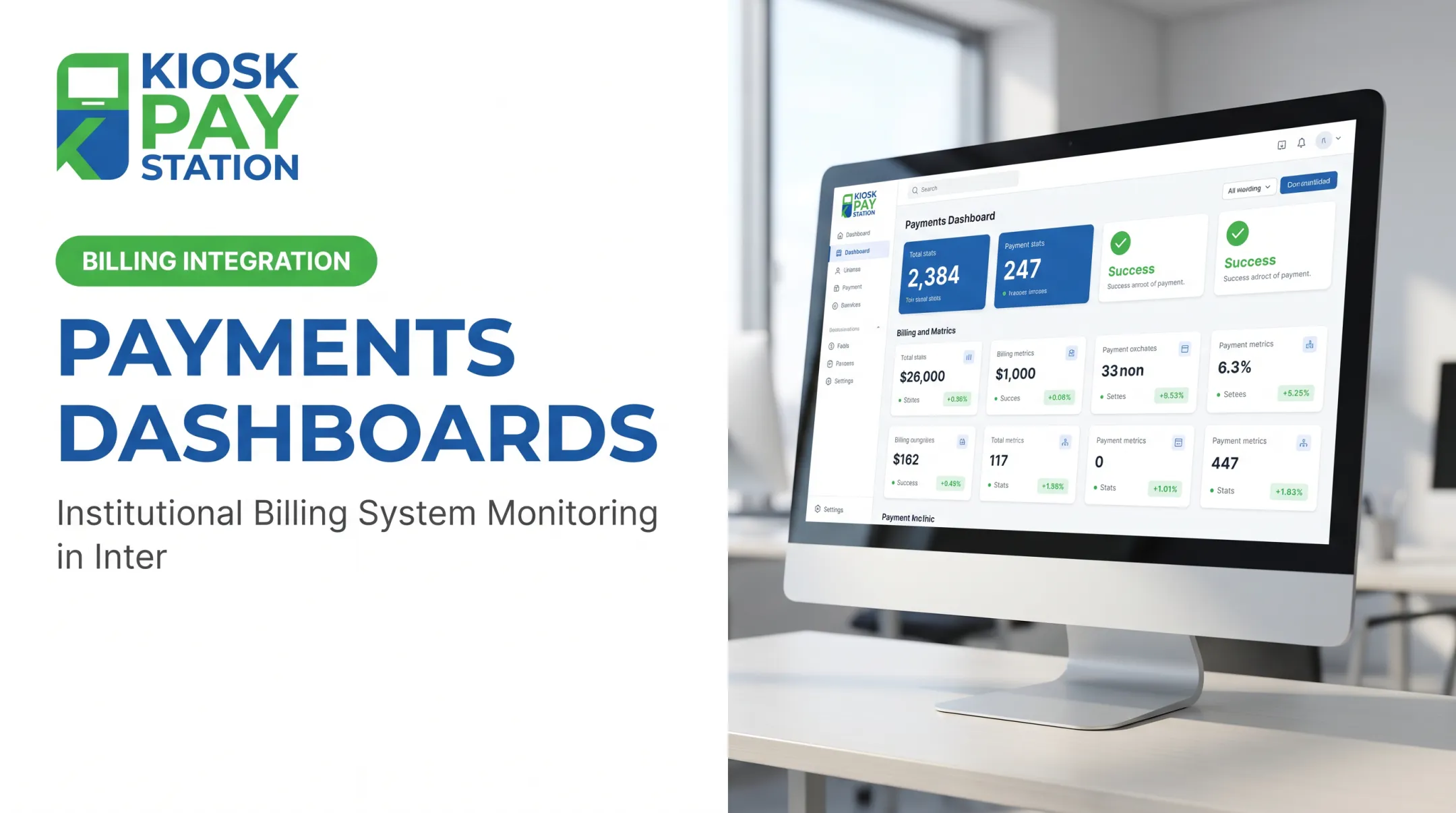
KIOSK PAY STATION supports agencies with billing-system integration, monitoring, and maintenance for secure payment operations already in the field. As one reference point, two self-service kiosks in Riverside County collected $3.01 million over a seven-day period, more than half the total collected, outperforming eight staffed cashier stations that processed $2.4 million in the same window.
After launch, track completion rates, reconciliation exceptions, counter traffic, and support requests. Payment security is a program that needs regular review, not a one-time setup.
Why Secure Payment Systems Matter
Weak payment security has real costs: fraud losses, unauthorized transactions, compliance exposure, disrupted collections, manual rework, and eroded public trust.
IBM's 2025 Cost of a Data Breach Report puts the global average breach cost at $4.44 million, with a $2.86 million average in the "Public" industry category. Treat that figure as a benchmark, not a prediction for any single agency.
Secure payment infrastructure also drives everyday operational outcomes:
- Shorter lines and more payment access outside business hours
- Cleaner books with fewer avoidable data-entry errors
- Better use of staff time on higher-value work
- Faster credit card authorization and settlement
Those operational gains hold only when the underlying system stays trustworthy. A secure payment stack protects both the payer and the organization through privacy, transaction integrity, availability, accessibility, and full traceability—built in through deliberate, layered design.
Conclusion: Building Trust Through Secure Payment Solutions
Secure payment systems are layered operational environments, not single features or compliance badges. Evaluating one means looking across several layers at once:
- Security controls and certified processing
- Supported payment methods and accessible customer experiences
- Reliable integrations and accurate reconciliation
- Vendor support that continues after go-live
KIOSK PAY STATION supports government and utility bill-payment environments with PCI DSS Level 1 and EMV-certified processing, plus billing-system integration, monitoring, and ongoing support. No vendor can promise zero risk. What matters is whether the controls in place actually address the threats your agency faces.
If your organization still relies on counter-only collection or an aging payment setup, map your current workflow against the layers covered here. A conversation about integration, monitoring, and support for secure bill payment can be the next practical step.
Frequently Asked Questions
How does secure payment work?
Payment details are entered and encrypted, then routed through a gateway for authentication and authorization. Once approved, the transaction settles and gets recorded for reconciliation and reporting.
What is the safest way to pay a large bill?
It depends on the biller, the amount, and the payment method's authentication and fraud protections. Using a trusted official payment channel with a verified receipt is generally the safest approach, regardless of method.
Is secure payment safe?
No system removes every risk. Layered controls, including encryption, tokenization, authentication, fraud monitoring, EMV, and PCI DSS practices, substantially reduce exposure but don't eliminate it entirely.
What is a secure payment system?
It's the combined technology, infrastructure, policies, and operational controls that protect payment data and verify transactions from entry through settlement and reporting.
What security features should a payment system have?
Look for encryption, tokenization, secure gateways, strong authentication, fraud monitoring, PCI DSS controls, access management, audit logs, and consistent software updates.
How can government agencies make in-person payments more secure?
Use EMV-capable terminals or kiosks with encrypted processing, privacy-conscious screen layouts, and secure cash handling. Pair that with ADA access, staff account controls, reconciliation, and routine maintenance checks.