Businesses and government agencies alike are moving away from disconnected payment tools and toward unified, integrated payment processing. The old model — separate terminals, manual entry, paper trails — creates security gaps and frustrates the people trying to pay.
This shift matters. Federal Reserve data shows 86% of businesses and 74% of consumers used faster or instant payments in 2023, and a quarter of consumers said slow payment speed was actively a problem for them (Federal Reserve Financial Services, 2024). This article breaks down what integrated payment processing actually is, how it works, and why public agencies increasingly rely on self-service kiosks to close the gap.
Key Takeaways
- Integrated payment processing connects payment acceptance directly to your existing software or agency systems.
- Agencies cut manual work, speed reconciliation, strengthen security, and improve the constituent experience.
- Self-service payment options cut counter workload and extend access beyond office hours.
- Prioritize security compliance, integration flexibility, and supported payment methods when selecting a solution.
What Is Integrated Payment Processing?
Integrated payment processing embeds payment acceptance directly into existing software, point-of-sale systems, or self-service kiosks, instead of running a separate, standalone terminal that doesn't talk to anything else.
Other setups leave gaps:
- Standalone terminals still require staff to manually key transaction totals into an accounting system
- Hosted payment gateways may redirect customers off-site to complete a purchase
Integrated processing skips both workarounds. The payment happens inside the same environment where the record needs to live.
APIs are the technical backbone here. According to PYMNTS, APIs connect finance teams directly to payment platforms and banks, enabling real-time data access instead of relying on traditional file-based transfers and batch processing (PYMNTS, 2024). That real-time connection is what lets a payment made at a kiosk or checkout instantly reflect in your accounting or billing system, with no manual step required.
Why It Matters Now
Digital-first, self-service expectations aren't going away. A 2026 PYMNTS report found that 22% of businesses identified better ERP, accounting, or treasury integration as the single improvement that would most help their payment operations.
Consumer payment habits are shifting too. The Federal Reserve's 2025 Diary of Consumer Payment Choice found mobile payments jumped to 11 per month in 2024, up from just four in 2018. Cash still made up 14% of payments, a reminder that digital-only isn't realistic for every population you serve.
How Integrated Payment Processing Works
A transaction typically flows through four stages:
- Initiation — the customer or constituent starts the payment
- Secure data capture — payment details are collected safely
- Authorization — the payment is approved
- System update — the result posts automatically to the system that tracks the account
That last step is where the real value shows up. Instead of a staff member re-entering totals at the end of the day, the payment syncs directly with accounting, CRM, ERP, or case management systems, eliminating manual reconciliation entirely.

Integration typically happens one of three ways:
- Real-time: payments sync instantly with existing systems the moment they're processed
- File-based: data transfers in batches at scheduled intervals
- Non-validated: a lighter-touch sync option for systems that don't require instant validation
Security runs underneath all of it. PCI DSS sets the baseline for protecting cardholder data and applies to anyone who stores, processes, or transmits that information, including merchants, processors, and service providers (PCI Security Standards Council).
Encryption and tokenization reduce how much sensitive data ever touches your systems directly, which shrinks exposure if something goes wrong.
Supporting Multiple Payment Methods
A modern integrated system isn't just about cards. It typically handles:
- Credit and debit cards (EMV-certified, tap/dip/swipe)
- ACH transfers
- Cash
- Checks
- E-wallets
That flexibility matters in public-sector workflows. Plenty of constituents still pay in cash, and a system that can't handle it excludes them.
Core Benefits of Integrated Payment Processing
Agencies that tie payments into billing and receivables systems typically see gains in five places:
- Operational efficiency: Automated reconciliation and reporting cut administrative overhead. Staff stop matching receipts to deposits by hand, and feeding instant payments into receivables (as FedNow materials describe) reduces exception items.
- Improved accuracy: Manual entry introduces errors. Integrated systems create real-time, traceable transaction records instead.
- Enhanced security: Centralizing payment data in encrypted, compliant systems limits how much sensitive information sits in disconnected tools.
- Better constituent experience: Faster transactions, extended hours, and more payment options. Nobody enjoys waiting in line on a lunch break to pay a water bill.
- Data visibility: Consolidated reporting supports financial planning across departments instead of siloed, department-by-department guesswork.
Riverside County shows the stakes in hard numbers. Two self-service kiosks collected $3.01 million over seven days, more than 50% of total tax payments, while eight staffed cashier stations processed $2.4 million the same week. Offering residents a self-service option alongside staffed counters produced that split.

Integrated Payment Processing for Government and Public Agencies
Public agencies face a specific set of pressures private businesses don't always deal with: long counter lines, limited staffing, fixed 9-to-5 hours, and the ongoing headache of manual cash handling. Courts, tax collectors, and utility departments are especially exposed, since payment volume often spikes around deadlines with no extra staff to absorb it.
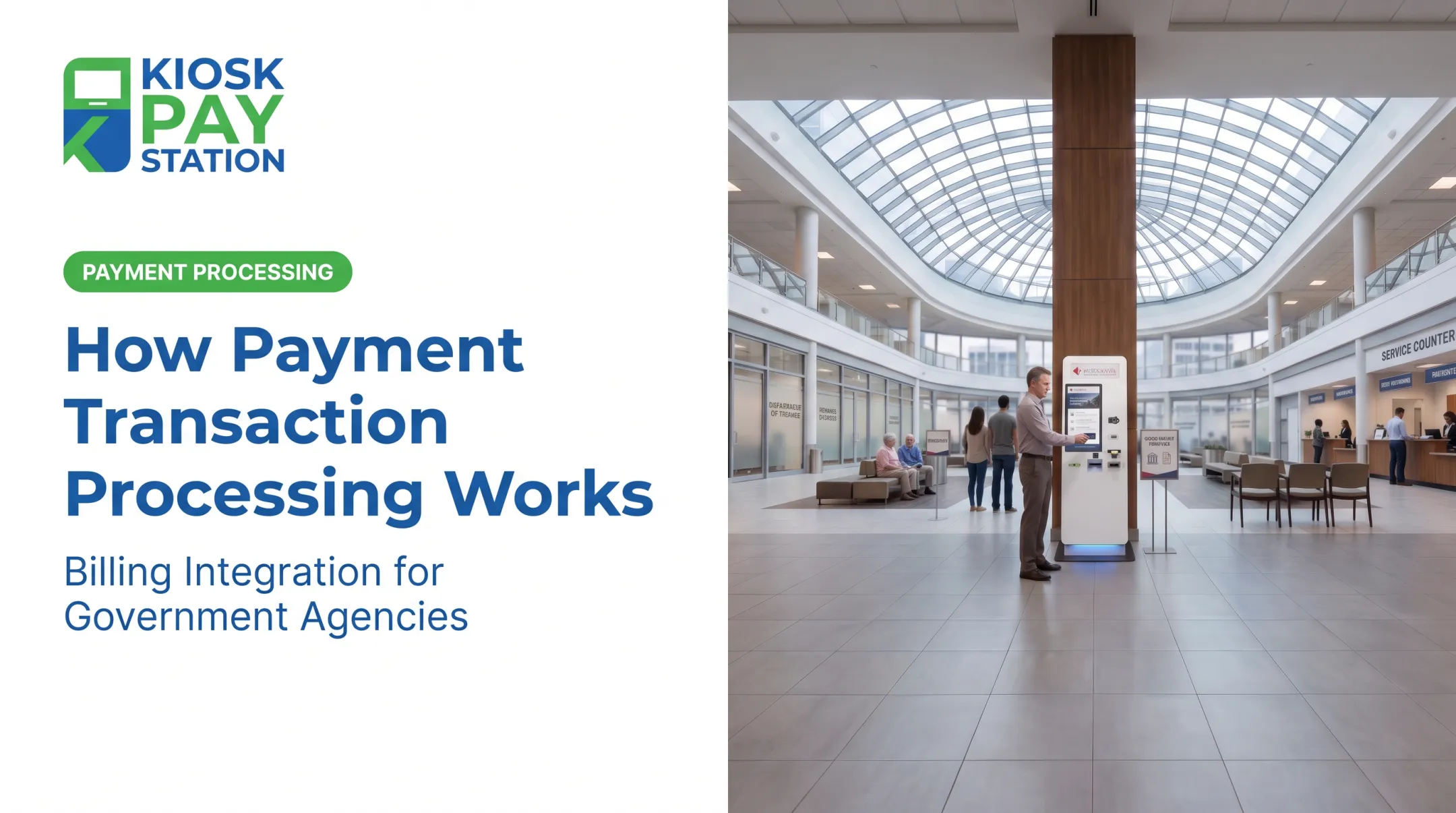
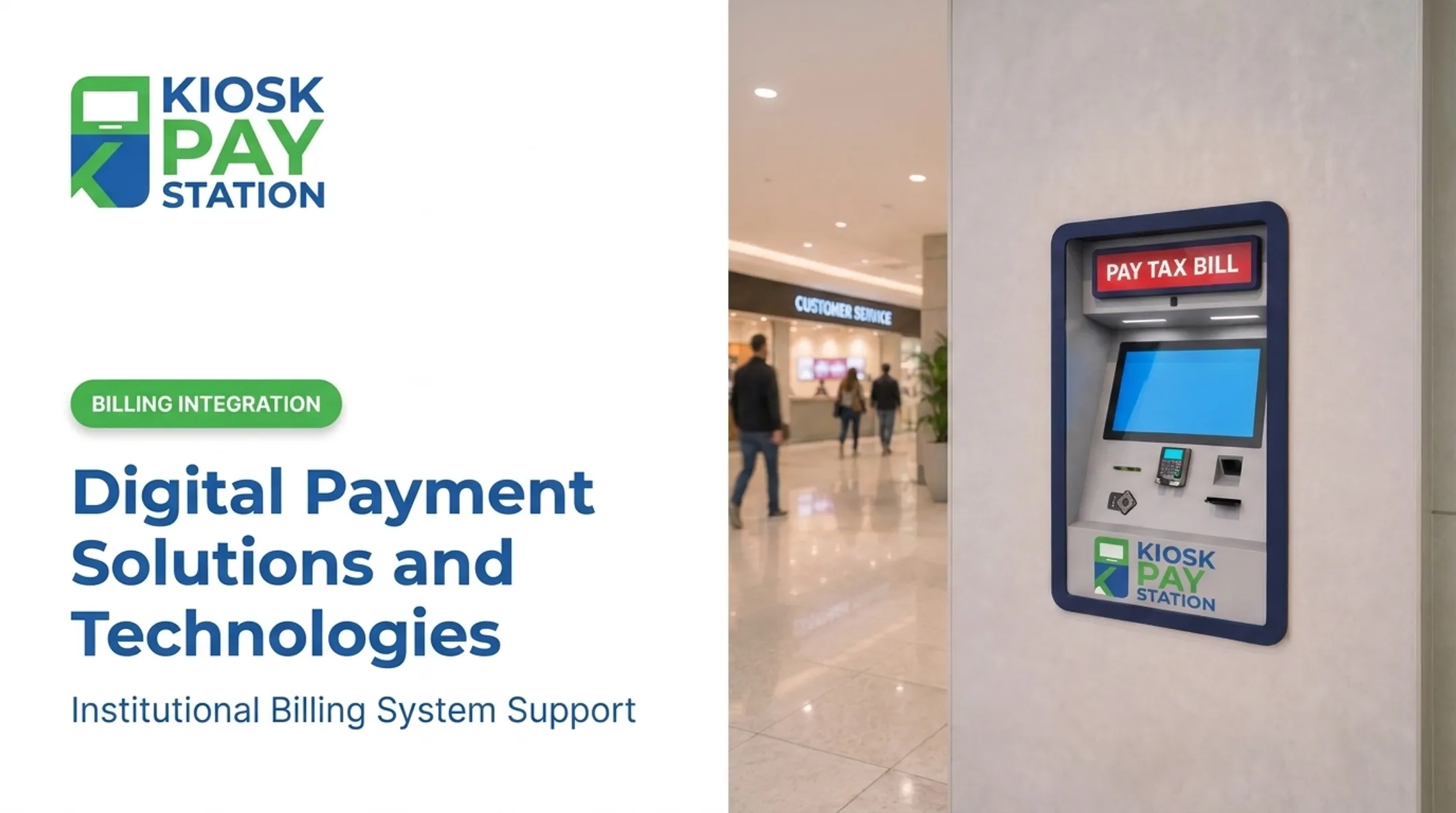
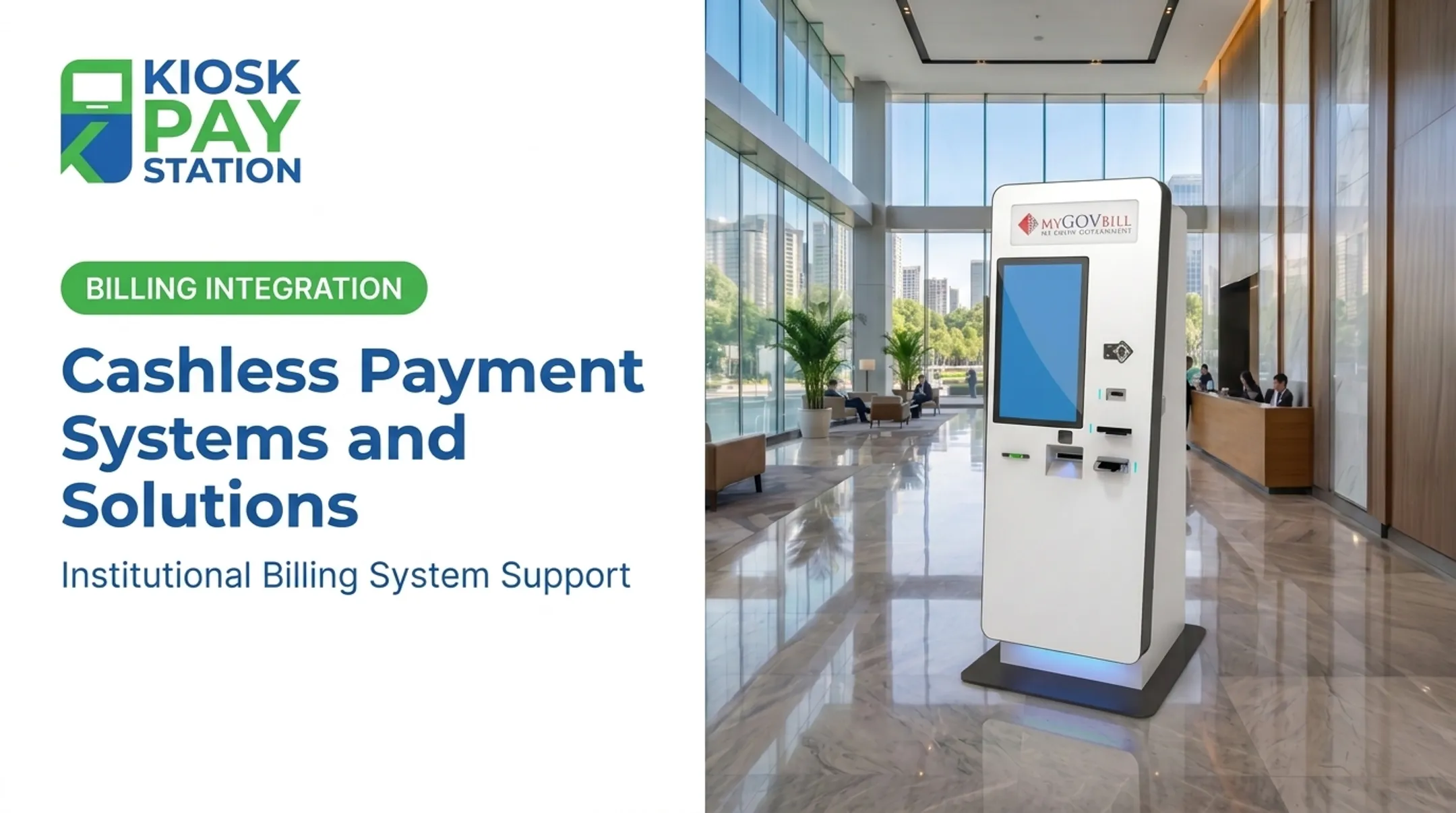
Integrated payment processing addresses this by connecting billing systems, payment channels, and reconciliation into one workflow. KIOSK PAY STATION, a subsidiary of MyGovBill, supports government and utility clients with billing-system integration, monitoring, and ongoing support — PCI-DSS compliant and EMV certified, with automated daily reconciliation built into the process.

The Riverside County deployment illustrates the impact directly: two kiosks outperformed eight staffed stations in the same seven-day window, without requiring additional counter staff.
Capabilities That Matter for Public Agencies
- Compliance-ready processing — PCI-DSS and EMV-aligned payment flows that meet public-sector security expectations
- Multilingual payment experiences — helping residents who aren't comfortable in English complete payments independently
- Custom data capture — unlimited custom fields per transaction, including department codes, account numbers, and property IDs, so payments route correctly without manual sorting
- Flexible integration — real-time, file-based, or non-validated syncing depending on what your existing billing or treasury system supports
Residents can look up accounts by invoice number, QR code, barcode, name, or account number, rather than forcing everyone through the same rigid lookup process. That flexibility cuts counter traffic and keeps books cleaner for treasury and finance teams.
How to Choose the Right Integrated Payment Processing Solution
Not every integrated payment provider fits government, utility, and municipal workflows. Before you sign a contract, pressure-test these four areas.
- Security credentials. Confirm PCI-DSS compliance and EMV certification, and ask how encryption is applied to transaction data. Don't assume "secure" means the same thing across vendors—ask for current attestations, not marketing claims.
- Integration flexibility. Confirm real-time syncing and file-based transfer options, and verify the platform can sit alongside your current treasury, court, or utility software without a rebuild.
- Payment method coverage. Cards and ACH matter, but so do cash and check if your population relies on them. A card-only kiosk or channel will exclude a meaningful share of constituents and push traffic back to staffed counters.
- Ongoing support terms. Ask about onsite maintenance, component replacement, monitoring, and response-time guarantees. A five-year onsite maintenance commitment, for example, is worth more than a vague "support included" line item.
Procurement should also request a clear workback plan: integration, testing, PCI validation, and staff onboarding, rather than assuming a fixed timeline applies across every deployment.

Frequently Asked Questions
What is an integrated payment system?
An integrated payment system embeds payment processing directly into existing business or agency software, allowing transactions to flow into accounting, billing, or case management systems automatically, with no manual re-entry required.
How does integrated payment processing improve security?
It relies on encryption, tokenization, and PCI-DSS compliance to protect sensitive payment data. Centralizing transactions through compliant systems also reduces the number of places where card data is exposed.
What industries benefit most from integrated payment processing?
Government and public-sector agencies see some of the biggest gains, especially courts, utilities, and tax collection offices handling high transaction volumes. Retail, healthcare, and SaaS organizations also benefit when payments must post straight into core systems.
How is integrated payment processing different from a payment gateway?
A payment gateway or PSP is the payment-service layer that processes the transaction itself. Integrated processing goes further, connecting that gateway directly into your agency's or business's system of record for automated updates.
Can integrated payment kiosks accept multiple payment types?
Yes. Modern integrated payment setups can accept cash, check, credit and debit cards, and e-wallet payments. Some self-service configurations also dispense exact change for cash transactions.
How long does it take to implement an integrated payment processing solution?
Timelines vary by agency and system complexity. Typical stages include evaluation, system integration, configuration, testing, and staff training, with ongoing monitoring afterward rather than a one-size-fits-all schedule.