A 2025 ICMA survey found that 70% of Pennsylvania municipalities cut expenditures and 63% raised revenue to manage fiscal pressure, but only 12% adopted productivity improvements. That gap is the problem digital transformation solves.
Digital transformation in government means shifting from manual, in-person, paper-heavy workflows to automated, self-service, data-driven operations. This article covers the core benefits, the technology pillars that matter, real challenges agencies face, and practical steps you can take, starting with one of the fastest wins available: payment modernization.
Key Takeaways
- Digital transformation cuts staff workload, improves accuracy, and reduces costs across departments
- Self-service portals, kiosks, and mobile apps are now baseline expectations, not extras
- Successful rollouts need clear strategy, stakeholder buy-in, and phased implementation
- Payment modernization delivers some of the fastest, highest-ROI wins in government tech
What Is Digital Transformation in Local Government?
Digital transformation applies digital technologies to operational infrastructure to improve efficiency, transparency, and service delivery. ICMA defines it as a management transformation that empowers staff to serve residents better. It starts with digital entry points and ends with a secure digital record of the complete transaction.
It demands a cultural and process shift across the agency, not a software install alone.
Digitization vs. transformation draws a clear line:
- Digitization puts a paper form online (a downloadable PDF instead of a printed one)
- Transformation redesigns the entire workflow, including status tracking, controls, records, and payment completion
An ICMA/OnBase survey found that 93% of local governments let residents download forms, but only 38% could complete and submit business-license applications fully online. That gap between digitization and transformation is exactly where most agencies get stuck.
Transformation happens in phases. There's no overnight switch, and pretending otherwise sets up projects to fail before they start.
The 7 Pillars of Digital Transformation
Deloitte's Digital Maturity Model outlines seven capabilities that define transformation readiness. Here's how each applies to a government context:
| Pillar | Government Application |
|---|---|
| Strategy & leadership | Executive sponsorship for digital initiatives, not just IT-driven projects |
| Citizen experience | Self-service portals, kiosks, and mobile apps for bill pay and permits |
| Data & analytics | Reliable resident, transaction, and reconciliation data across systems |
| Technology & infrastructure | Secure, scalable architecture that supports growth |
| Process automation | Automating routine steps and routing exceptions instead of manual review |
| Culture & change management | Staff buy-in and training, not just new tools |
| Security & compliance | PCI-DSS, data protection, and encryption built into every touchpoint |

Change management is where most projects stall. According to the GAO, top leadership attention is essential to overcome organizational resistance and build support for change. Skipping this pillar by rolling out new tech without preparing staff or residents is one of the most common reasons digital initiatives fail after launch.
Core Benefits of Digital Transformation for Local Government
The payoff shows up across five areas:
- Improved citizen experience: 24/7 self-service access to bill pay, permits, and records means fewer trips to city hall
- Operational efficiency: automating data entry and reconciliation frees staff for higher-value work
- Cost savings: less paper, printing, mailing, and staffing at payment counters
- Transparency and trust: automated notifications and searchable public data build confidence
- Business continuity: cloud-based, self-service systems keep essential services running during weather events or staffing gaps
A Deloitte-backed survey found more than half of Americans prefer interacting with government online, but only 23% do it regularly. Preference doesn't equal adoption yet.
That gap is why agencies should meet residents where they are: add digital options without cutting assisted channels entirely. Online portals and on-site self-service stations bridge the middle—digital convenience with a familiar, in-person path for residents not ready to go fully online.
Modernizing Payment Collection: A Practical Digital Transformation Win
Bill payment counters are the most visible, highest-friction touchpoint in most local governments. Long lines, limited hours, and manual cashier processing frustrate residents and tie up staff. That makes payments a natural first target for transformation.
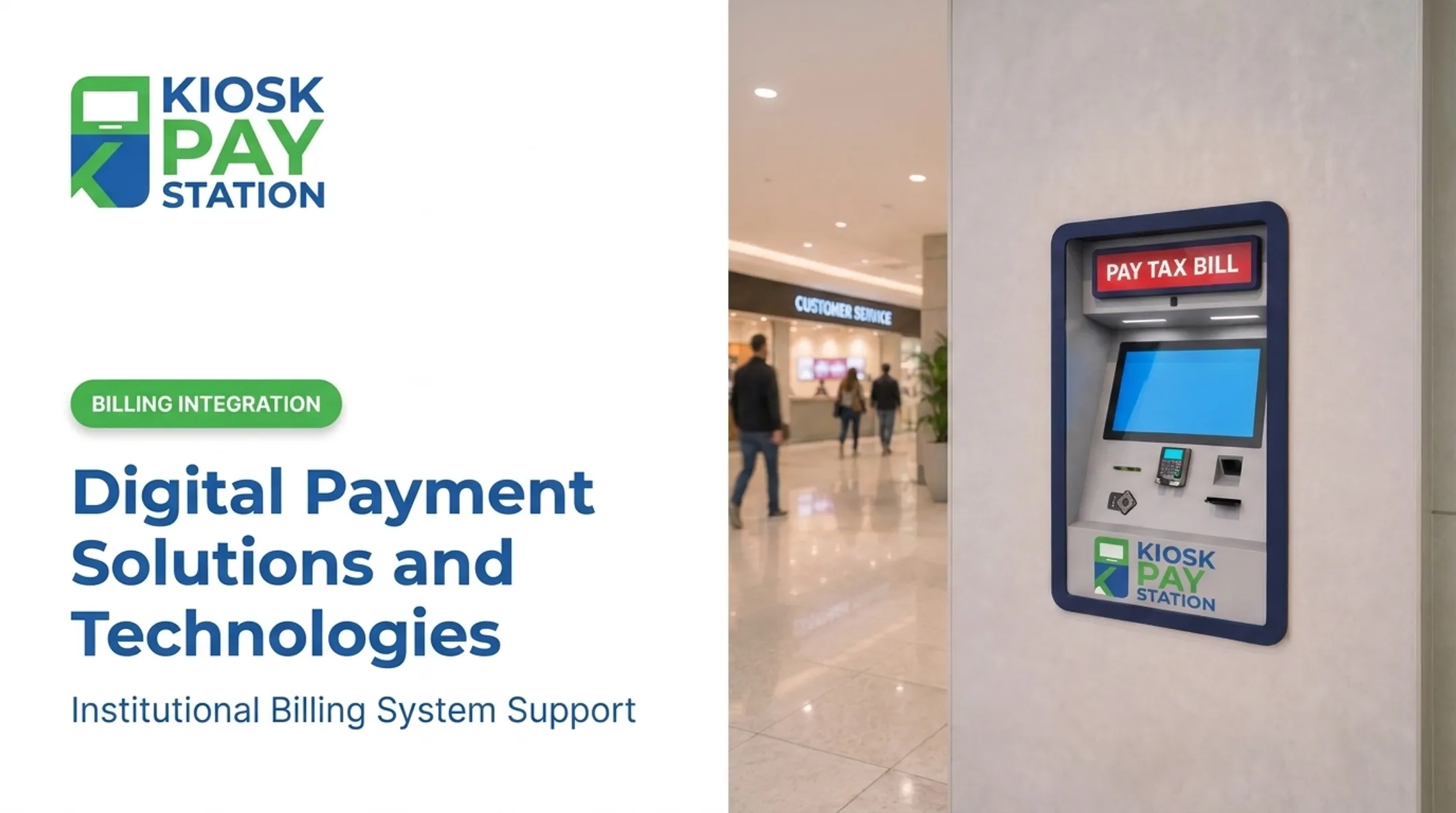
Digital self-service payment options let residents pay utility bills, court fees, taxes, and permits by cash, card, check, or e-wallet—without waiting in line or working around a 9-to-5 counter schedule.
The Riverside County Proof Point
Riverside County deployed two self-service kiosks that collected $3,001,000 in seven days. During that same period, eight staffed cashier stations processed $2,400,000 combined. The two kiosks accounted for more than 50% of total payments collected.

A Riverside County finance director credited the deployment with cutting lines and improving customer service—one of the county’s strongest payment-modernization results in that period.
What Makes This Work
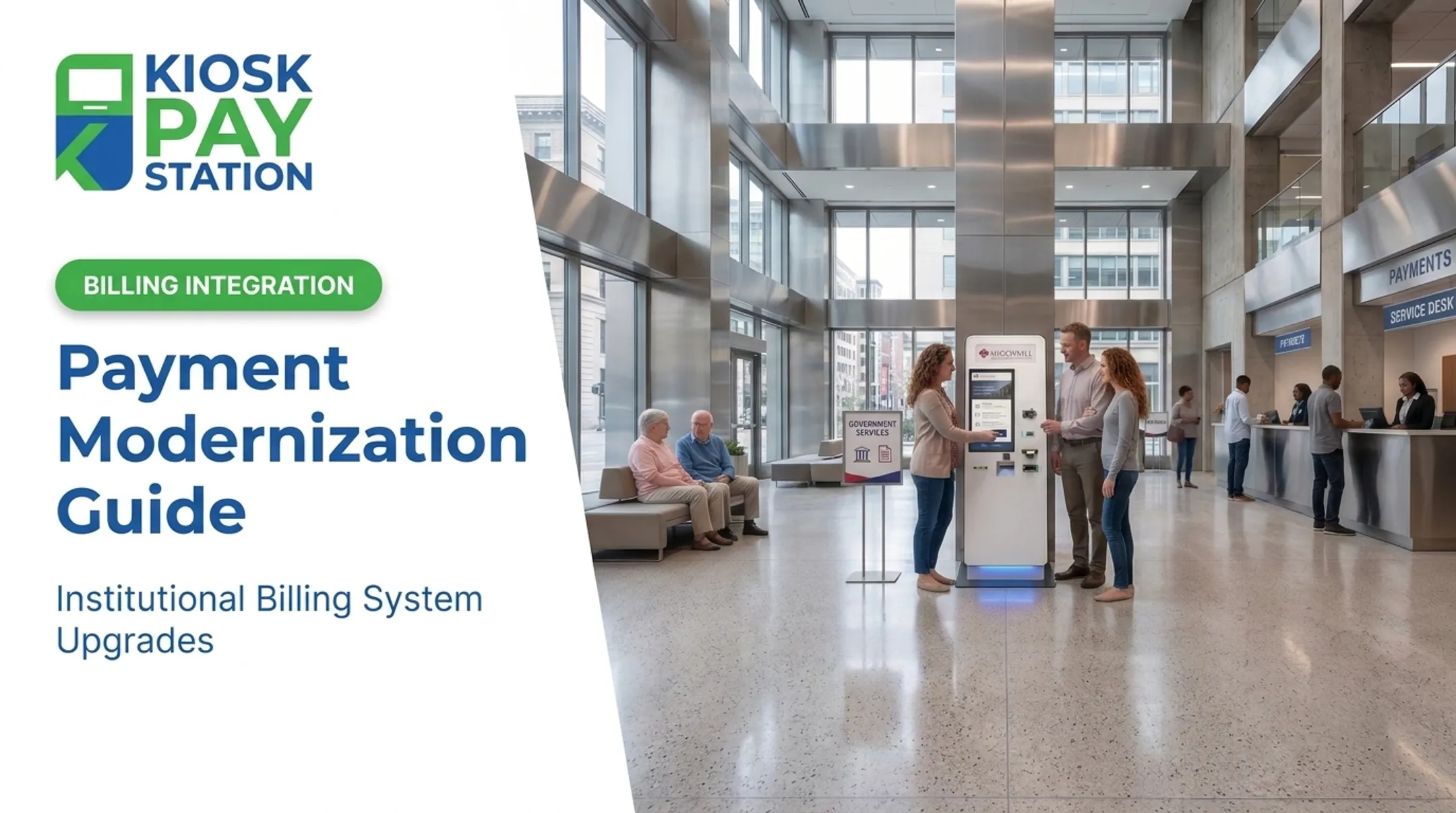
Results like Riverside’s stick when payment modernization is treated as an integration and operations project—not a one-off hardware buy. KIOSK PAY STATION focuses on connecting an agency’s existing payment and billing systems, then supporting them with monitoring, maintenance, and optimization.
Compliance and access requirements still apply to government bill-pay workflows:
- PCI-DSS compliant payment processing
- EMV certified card acceptance (tap, dip, swipe)
- ADA-conscious resident experiences, including clear on-screen guidance
- Multilingual interfaces for broader community access
Agencies can layer these capabilities onto current infrastructure with real-time, file-based, or non-validated integration, instead of ripping out billing systems and starting over. That service-led path is what turns a short proof window into durable counter relief, cleaner reconciliation, and payment access beyond lobby hours.

Common Challenges and How to Overcome Them
Local governments hit familiar barriers when modernizing payments and services. Each one has a practical path forward.
Limited Budgets
Start small. A single payment kiosk or online portal can demonstrate ROI before you scale to a full system overhaul. Pilots de-risk the investment and give you real data for budget conversations.
Staff and Resident Resistance
Change is uncomfortable. Reduce resistance with:
- Clear training before go-live, not after
- Transparent communication about what's changing and why
- Phased rollouts that let staff adjust gradually
Data Silos and Legacy Systems
Legacy modernization remains a top priority for state CIOs, according to a NASCIO survey of 49 state CIOs. Choose solutions with flexible integration paths: real-time, file-based, or non-validated sync. That way you're not forced into an all-or-nothing infrastructure replacement.
Cybersecurity Concerns
The FBI's 2024 IC3 report recorded over 17,000 government-impersonation complaints totaling more than $405 million in losses nationally. That's a national figure, not a municipal one, but it underscores why encrypted, PCI-DSS compliant technology isn't optional for anything touching resident financial data.
Steps to Build a Digital Transformation Roadmap
Build the roadmap in four stages so every initiative stays tied to citizen outcomes and operational gains.
- Assess current digital maturity — identify your most time-consuming, error-prone manual processes. Payment collection, permitting, and records requests are usually the biggest offenders.
- Set measurable goals — tie targets to citizen satisfaction, cost savings, and staff hours recovered. Establish baselines so you can demonstrate ROI.
- Prioritize quick wins — deploy self-service payment options before tackling more complex system overhauls. Visible wins build momentum for bigger projects.
- Plan for iteration — treat this as ongoing work, not a one-time project. Monitor performance and adjust continuously.

Agencies exploring payment modernization can use a free needs assessment from Kiosk Pay Station to map integration options before making any commitment.
Frequently Asked Questions
What are the 7 pillars of digital transformation?
They are strategy and leadership, citizen experience, data and analytics, technology infrastructure, process automation, culture and change management, and security and compliance. In local government, each one affects how services are delivered, measured, and protected.
What is digital transformation in government?
It's the shift from manual, paper-based processes to digital, automated, citizen-centered service delivery. This includes redesigning workflows end-to-end, not just moving forms online.
How much does it cost to digitally transform local government services?
Costs vary widely by scope and system complexity. Phased approaches and targeted solutions, such as payment integration, lower upfront investment compared to full system overhauls.
Is digital transformation only about technology?
No. It also requires process redesign, culture change, and stakeholder buy-in. Skipping the human side, especially change management, is a leading cause of stalled initiatives.
What is the easiest first step for a small local government to start digital transformation?
Target a high-friction process like bill payment or permit applications. These touchpoints are visible, frustrating for residents, and typically deliver fast, measurable ROI.
How do self-service kiosks fit into government digital transformation?
Kiosks extend payment access beyond business hours while cutting counter workload and human error. In one seven-day stretch, Riverside County’s two kiosks collected $3.01 million and outperformed eight staffed cashier stations.