Many agencies still run on paper files, legacy servers, and counter-only payment collection. That gap between citizen expectations and government reality is exactly what GovTech aims to close. This guide covers what GovTech means, the core IT solutions agencies are adopting, top 2026 trends, and how to modernize payment collection without ripping out everything you already have.
Key Takeaways
- Effective GovTech stacks combine cloud infrastructure, cybersecurity, citizen portals, data platforms, and self-service payment technology
- Modernization cuts costs and staff workload while improving citizen satisfaction and extending service hours
- PCI-DSS and EMV certifications are non-negotiable when vetting government IT vendors
- Prioritizing one or two high-impact upgrades beats a full system overhaul
What Is Government Technology (GovTech)?
GovTech refers to digital tools and platforms built specifically to modernize public sector operations. The World Bank frames it as a "whole-of-government approach to public sector modernization" that puts the citizen at the center of reforms, emphasizing accessibility and transparency alongside efficiency.
GovTech differs from standard enterprise IT in several structural ways:
- Procurement rules: Public agencies follow bid processes, budget cycles, and vendor vetting that private companies skip
- Compliance requirements: FedRAMP, PCI-DSS, ADA, and state-specific data laws all apply
- Accountability: Every transaction and record may be subject to public audit or open-records requests
GovTech supports a wide range of public offices, including city halls, courts, utility providers, tax collectors, parking authorities, and correctional agencies. These organizations rely on the tools to keep operations running and constituents served.
Core IT Solutions Government Agencies Are Adopting
Cloud Infrastructure and Cybersecurity Automation
Moving off aging on-premises servers cuts maintenance costs and improves uptime. 88% of state CIOs said they were expediting cloud adoption across programs and services, according to NASCIO and Accenture's 2023 survey of 43 state CIOs.
That shift only holds if security keeps pace. Ransomware hit 34% of state and local governments in 2024, down from 69% the year before, per Sophos's 2024 ransomware report. Of those hit, 54% paid the ransom—a costly gamble automated threat detection and regular backups can prevent.

Citizen Portals, Data Integration, and ERP
Agencies are also rebuilding how the public gets help and how departments share data:
- AI chatbots and portals: GSA's scam-victim chatbot handled 4,000+ inquiries in one month; 78% of users got a satisfactory answer without staff
- Data integration platforms: Unifying planning, health, and public safety data speeds decisions that once needed inter-department calls
- ERP modernization: Washington State's One Washington project is replacing 20- to 40-year-old systems across 120+ agencies and aims to retire at least 22 legacy financial systems

Self-Service Payment Kiosks
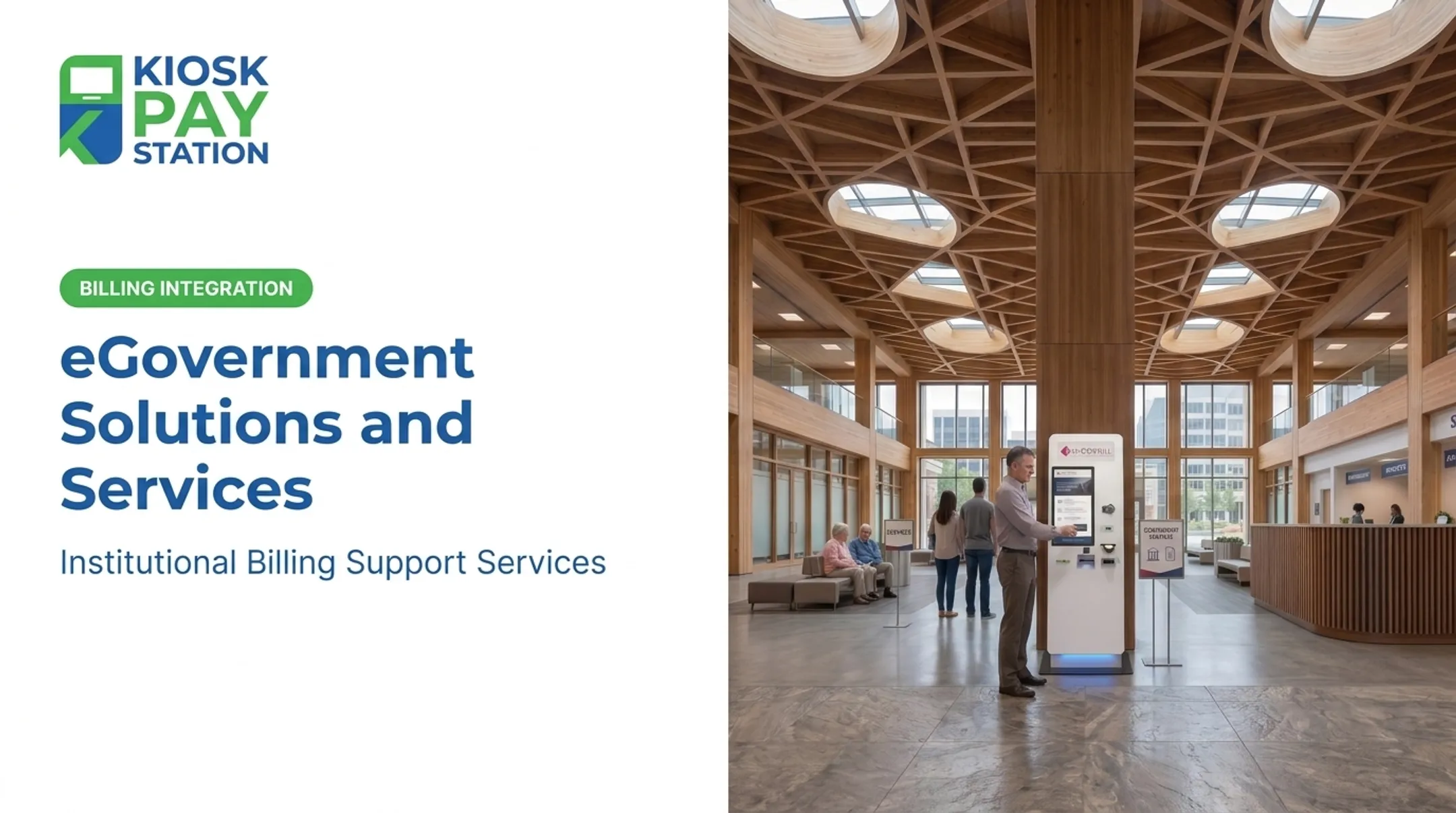
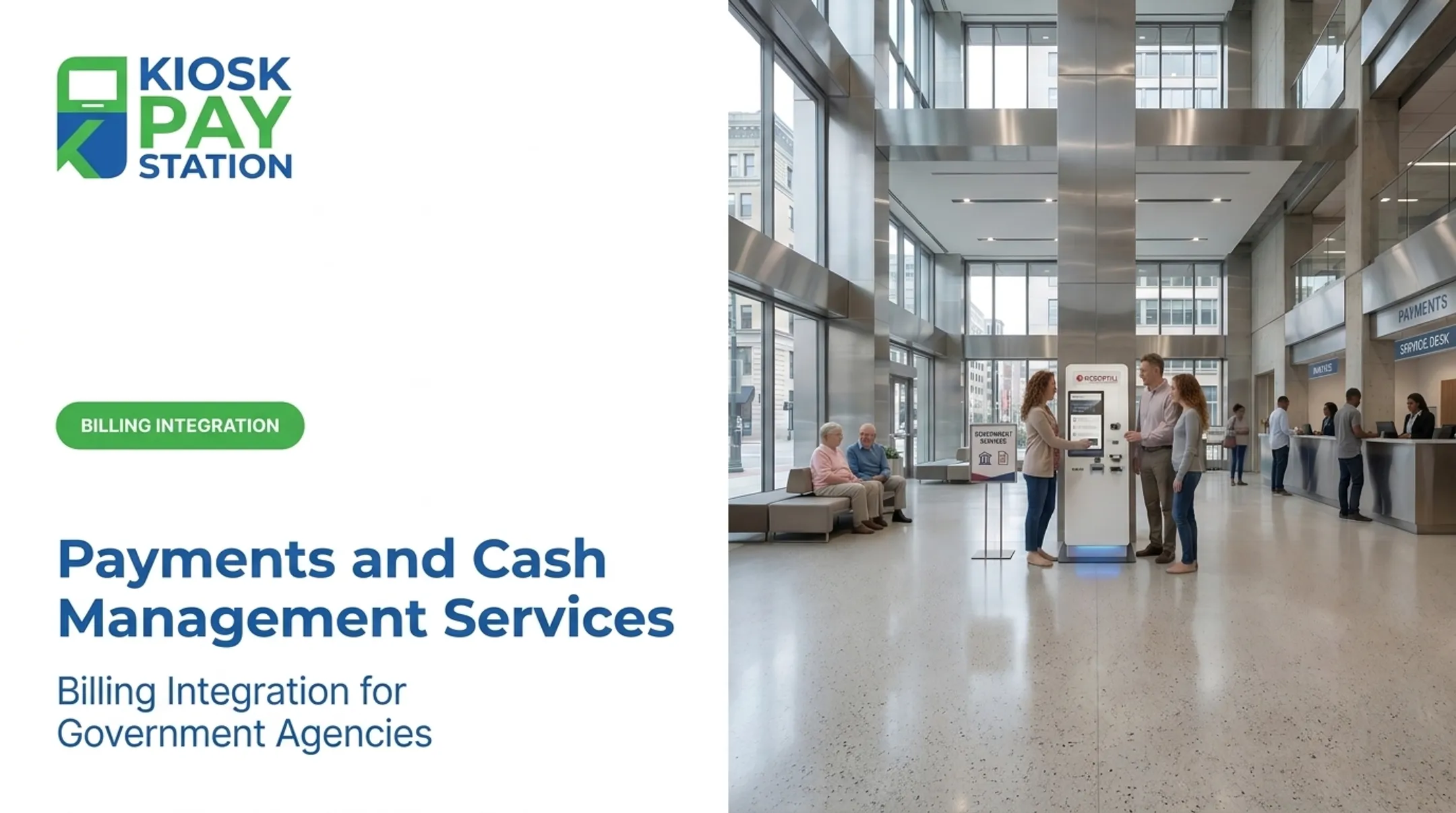
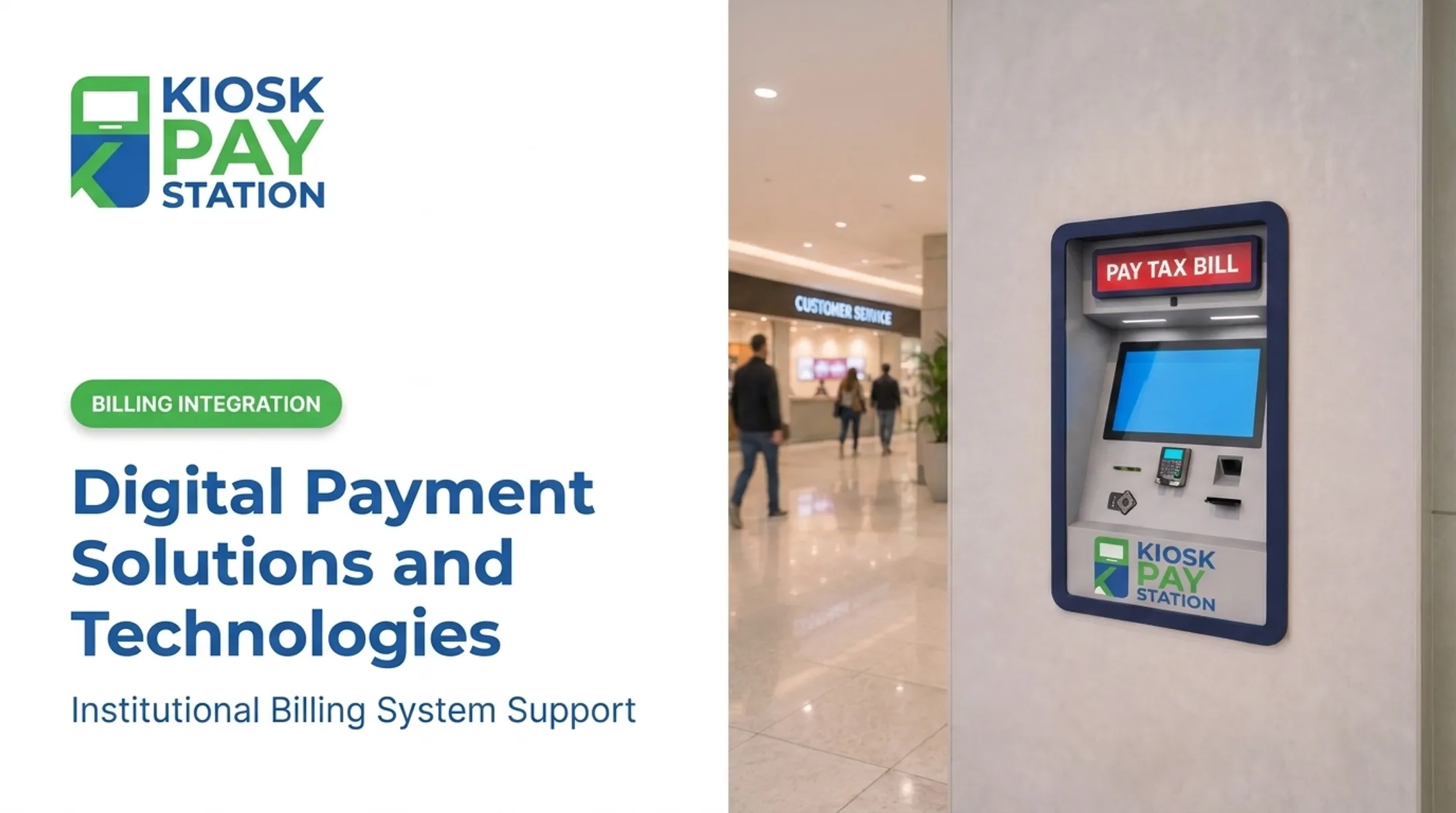
Kiosks let residents pay utility bills, court fines, taxes, and permits any time, not just 9-to-5. We'll cover this in depth below since it's often the fastest win for agencies feeling budget pressure.
Why Self-Service Payment Technology Is a Growing GovTech Priority
Counter-based payment collection has three chronic problems: long lines, limited hours, and manual reconciliation errors that eat staff time every month-end.
KIOSK PAY STATION, a MyGovBill subsidiary, supports PCI-DSS compliant, EMV-certified self-service payment workflows that take cash, check, card, and e-wallet payments for utility bills, court fines, and tax collection. The focus is billing-system integration, monitoring, maintenance, and support—not new hardware sales.
In a seven-day period, two kiosks at Riverside County collected $3,001,000 in payments, while eight staffed cashier stations processed $2,400,000 during the same stretch. The two kiosks alone brought in more than half the total collected.

That volume split shows how quickly self-service can carry a large share of routine payment traffic and ease pressure on staffed counters.
Features That Matter to Agencies
- ADA-minded interfaces with large touchscreens plus voice and light guidance
- Multilingual screens for diverse constituent communities
- Unlimited custom fields per transaction (account numbers, department codes, property IDs)
- Real-time, file-based, or non-validated sync with treasury, court, or utility systems
Agencies still need reliable connections between payment channels and the systems of record. Integration options, ongoing monitoring, and maintenance support keep reconciliation cleaner and reduce time spent chasing hardware or posting errors.
When routine payments move off the counter—and access can extend toward 24/7 where the agency allows it—staff can spend more time on complex cases instead of repetitive intake.
Key Benefits of Government IT Modernization
McKinsey estimates roughly $750 billion annually could be saved across U.S. government operations through modernization, without sacrificing service quality. Agencies that modernize typically gain in four areas:
- Cost and time savings: Automation cuts manual processing and administrative overhead that once tied up staff each week
- Transparency and accuracy: Digital records and automated reconciliation reduce human error and simplify audits
- Citizen experience: Faster service and after-hours access help close the gap—a 2022 global survey found only 56% satisfaction with online government services versus 77% for private-sector services
- Security posture: PCI-DSS and EMV controls, paired with cloud-based protections, reduce breach exposure

How to Choose the Right GovTech Partner
Vendor selection makes or breaks a modernization project. Keep these priorities in mind:
- Check compliance certifications first. PCI-DSS and EMV certification aren't optional extras for payment technology; they're baseline requirements.
- Confirm public-sector track record. A vendor that's only sold to retail chains won't understand procurement cycles or audit requirements.
- Favor integration over rip-and-replace. Solutions that connect to your existing treasury or billing system avoid costly, disruptive overhauls.
- Ask about ongoing support terms. Multi-year maintenance, monitoring, and support guarantees, such as a five-year commitment, protect your investment long after go-live. Don't try to modernize everything at once. Agencies that pick one or two high-impact upgrades, such as billing-system integration and cloud migration, see faster wins than those attempting a full department-wide overhaul.
Frequently Asked Questions
What exactly is GovTech?
GovTech is technology built specifically to modernize public sector service delivery, accessibility, and transparency. It covers everything from cloud infrastructure to citizen-facing payment kiosks.
What do government IT solutions do?
Government IT solutions automate workflows, secure sensitive data, and connect departments with citizens digitally. That cuts manual work and speeds service delivery.
What are examples of technology solutions?
Common examples include cloud platforms, AI chatbots, data integration dashboards, and self-service payment kiosks. Many agencies combine several of these to modernize different departments at once.
What are the top 5 technologies for 2026?
Based on NASCIO's state CIO priorities, the top areas are cybersecurity, artificial intelligence, digital government services, legacy modernization, and cloud services.
What cloud providers does the government use?
Major options include AWS GovCloud, Microsoft Azure Government, and Google Cloud, each with FedRAMP-authorized offerings suited to federal and state compliance needs.
What ERP does the government use?
Common platforms include Oracle, SAP, Workday, and Tyler Technologies. Washington State and Vermont, for example, both selected Workday for their ERP modernization projects.