Government agencies and businesses are shifting toward flexible, multi-channel payment collection. Constituents expect to pay how they want, when they want, whether that's cash, card, e-wallet, or an automatic bank draft. Agencies still stuck with cash-only counters or rigid business hours face long lines, frustrated residents, and hours of manual reconciliation every week.
This guide breaks down what flexible payment systems are, the main types available, why they matter for public agencies specifically, and how self-service kiosks like those built by KIOSK PAY STATION fit into the modern payment landscape.
Key Takeaways
- Flexible payment systems let payers choose their method, channel, and timing across cash, card, check, and e-wallet
- Self-service kiosks extend bill payment access beyond the 9-to-5 counter and cut staff workload
- PCI-DSS compliant, EMV certified systems automate reconciliation and keep government transactions fully traceable
- Riverside County's two self-service kiosks collected $3.01M in one week, outpacing eight staffed cashier stations at $2.4M
What Are Flexible Payment Systems?
A flexible payment system is any payment infrastructure that lets the payer, not the biller, choose the method, timing, and channel of payment. Constituents can pay:
- In person at a counter or self-service kiosk
- Online through a web portal or digital wallet
- On their own schedule, including installments
That model breaks from traditional government and utility billing. Those systems ran on single-channel processing: one counter, fixed hours, and a narrow set of accepted payment types. If you couldn't make it to city hall by 4:30 p.m. with a check, you missed the window.
The federal government is pushing the same shift. Executive Order 14247 (March 2025) directs federal agencies to move receipts to electronic processing wherever practical, while still preserving alternatives for qualifying exceptions. Treasury's Pay.gov platform already supports ACH debit, credit and debit cards, and digital wallets like PayPal and Venmo for federal payments.
Cards now account for more than three-quarters of all noncash payments by number, according to Federal Reserve data covering 2024. Payers have moved past cash-only expectations. Agencies still locked into single-channel billing absorb the friction in longer lines, slower collections, and higher counter workload.
Types of Flexible Payment Systems and Methods
Most flexible payment infrastructure falls into three buckets:
- Cash-based: Physical currency for unbanked and underbanked payers
- Card/electronic-based: Credit, debit, and ACH over card networks or bank rails
- Digital/mobile-based: Mobile wallets, apps, and online portals
Each solves a different problem. Cash remains essential for accessibility. Cards move fast and reconcile electronically. Digital and mobile options add convenience for tech-comfortable payers. Most modern systems blend all three.

Recurring and Installment-Based Options
Beyond one-time tender types, agencies also need flexible timing. Subscription billing and Buy Now Pay Later dominate the private sector, but public agencies use a related tool: installment plans. Raleigh, for example, allows eligible utility customers to split unpaid balances into weekly, biweekly, or monthly payments over a three-month window. San Diego's water utility permits installment plans stretching up to 36 months. These programs keep revenue flowing without forcing collections action.
Self-Service and Kiosk-Based Payments
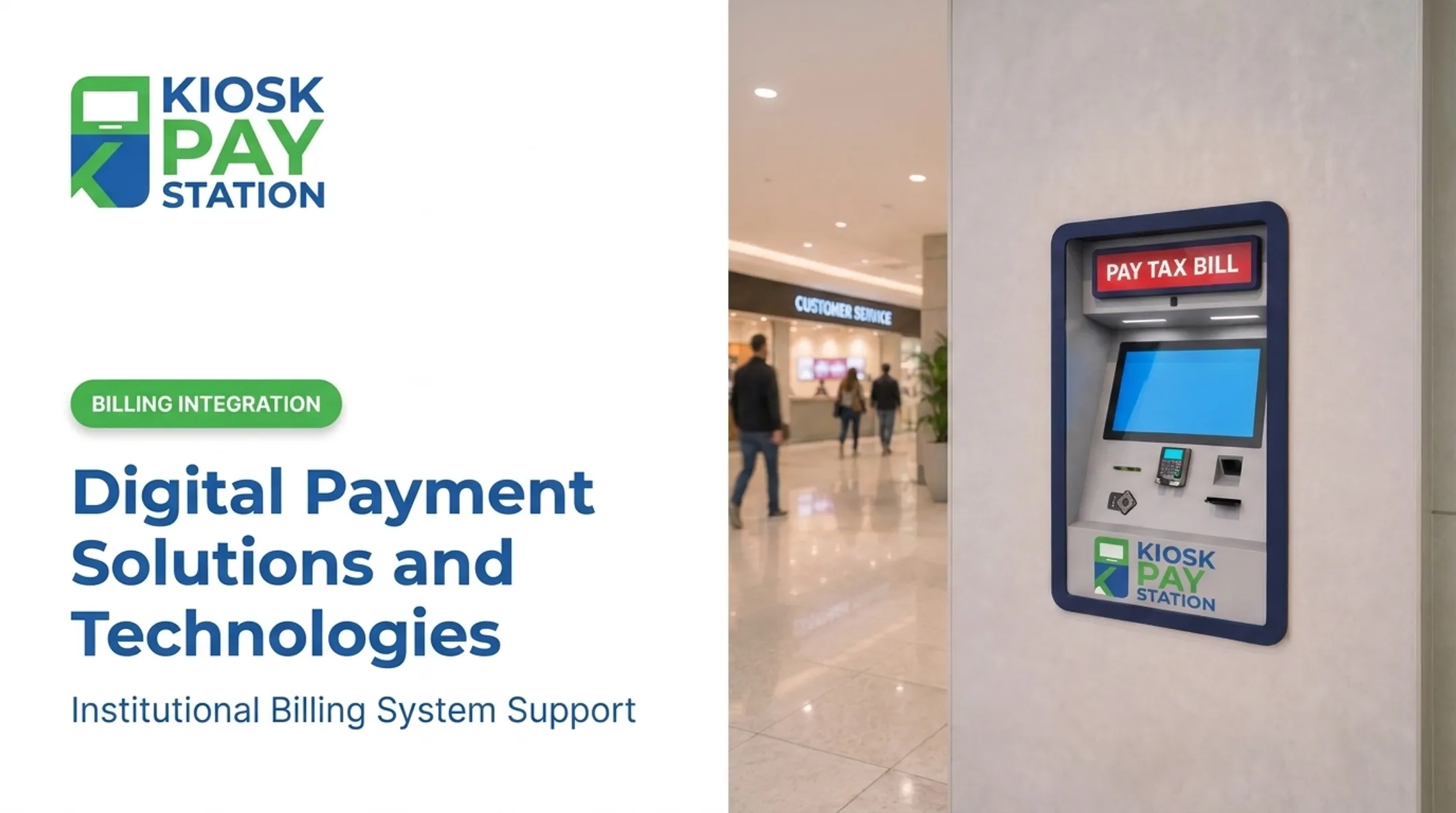
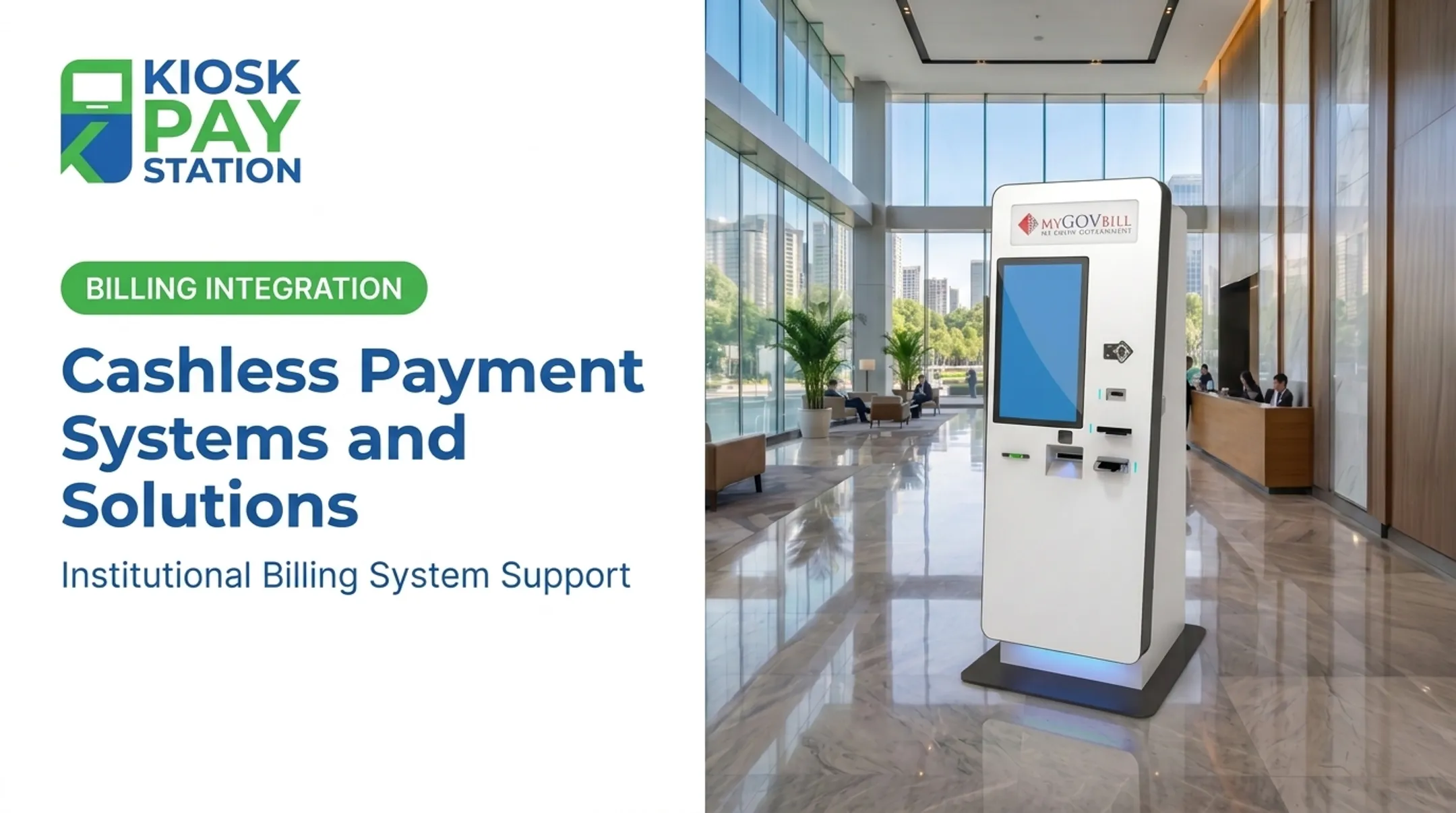
Payment method flexibility also depends on where constituents can pay. Self-service kiosks combine multiple payment types—cash, card, check, and e-wallet—into a single access point that doesn't clock out at 5 p.m.
A well-configured bill-payment kiosk typically:
- Accepts cash, checks, EMV card payments (tap, dip, or swipe), and e-wallets
- Dispenses exact change in bills and coins
- Supports a wide transaction range so one device can take a small parking fine or a large property tax payment without a separate process
For agencies, that mix cuts counter traffic while keeping cash-capable access available after business hours.

Digital and Mobile Payment Options
Mobile wallets, ACH bank transfers, and online portals round out the flexible payment mix. These channels suit constituents who prefer to pay from a phone or laptop without visiting a counter. For agencies, they're often the lowest-cost path to process—no cash handling and less hardware to maintain.
Why Flexible Payment Systems Matter for Public Agencies and Businesses
The case for flexibility shows up in staff time, cash flow, and constituent satisfaction.
- Administrative burden: The Government Finance Officers Association recommends electronic payments because they cut reconciliation time versus cash and paper checks. Fewer manual entries mean fewer errors and less ledger-matching.
- 24/7 access: A Texas Municipal Courts Education Center practice guide notes court kiosks can accept payments "at any hour, without staff involvement," which reduces missed deadlines.
- Cash flow and traceability: Automated transactions leave a clean digital trail; manual cash counts are slower, error-prone, and harder to audit.
- Accessibility: Under the 2010 ADA Standards, self-service machines must support accessible operable parts and speech output. Multilingual interfaces reach more of the community.
The Riverside County Proof Point
Numbers make the case better than theory. Riverside County deployed two self-service kiosks that collected $3.01 million over a seven-day period. During that same window, eight staffed cashier stations processed $2.4 million. The two kiosks brought in $601,000 more than eight fully staffed counters, and accounted for over 50% of all payments collected during that timeframe.

County finance leadership also reported shorter lines and rising demand for kiosks at satellite offices, where self-service can run past normal business hours.
Key Features to Look for in a Flexible Payment Solution
Not every payment system is built for institutional use. Government and utility buyers should look for:
- Security and compliance: PCI-DSS compliance and EMV certification aren't optional for handling public funds. Look for encrypted processing built to current PCI DSS v4.0.1 standards.
- Multi-method acceptance: Cash, check, credit/debit card, and e-wallet support inside a single system, not five separate tools.
- Integration flexibility: Real-time, file-based, or non-validated synchronization with existing billing and accounting systems, so payment data doesn't require manual re-entry.
- Customization: Custom data fields (account numbers, department codes, property IDs), branded screens, multilingual interfaces, and ADA-accessible design.
These aren't nice-to-haves for a government buyer. They're the difference between a system that finance staff trust and one they end up working around.
How KIOSK PAY STATION Delivers Flexible, Self-Service Payment Solutions
KIOSK PAY STATION was built specifically for government bill payments, backed by more than 25 years of experience through its parent ecosystem, SYZYGY Payment Solutions, which also operates MyGovBill and MyCOURTBill.
Integration flexibility is central to the approach. Agencies can connect billing systems through:
- Real-time integration for live account validation and posting
- File-based workflows that fit existing batch processes
- Non-validated options when a simpler acceptance path is enough
Payment software can run as a complete end-to-end stack or layer onto infrastructure already in place, so agencies aren't locked into a single technical footprint.
Long-term reliability comes from monitoring, maintenance, and support for institutional clients, including a five-year onsite maintenance and component replacement program for supported deployments. That coverage reduces the risk of payment channels going dark during peak collection periods.

Account lookup flexibility speeds transactions along. Constituents can find their account by:
- Invoice number
- QR code
- Barcode scan
- Account number
- Custom identifiers (department codes, property IDs, and similar fields)
That range matters when self-service replaces a staffed counter. A resident paying a parking ticket should not hunt for an account number when a barcode scan gets them there in seconds.
Frequently Asked Questions
What are the three types of payment systems?
The three broad categories are cash-based, card/electronic-based, and digital/mobile-based payment systems. Each serves different needs, from unbanked residents paying cash to users paying with a mobile wallet.
How do self-service kiosks improve payment collection for government agencies?
Kiosks provide 24/7 access, reducing counter congestion during business hours. They also automate reconciliation, cutting the manual work tied to matching cash and check payments to accounts.
Are self-service payment kiosks secure?
Yes, when built to institutional standards. Look for PCI-DSS compliance, EMV certification for card acceptance, and encrypted transaction processing throughout.
Can flexible payment kiosks accept cash as well as cards?
Yes. Flexible payment kiosks can accept bills, checks, credit and debit cards, and e-wallet payments. Many also dispense exact change in bills and coins for cash transactions.
What industries benefit most from flexible payment systems?
Government agencies, utilities, courts, and parking authorities see the biggest gains, since these organizations handle high transaction volumes with hard payment deadlines. General businesses with recurring billing also benefit.
How does a flexible payment system integrate with existing agency software?
Integration typically happens through real-time, file-based, or non-validated synchronization, connecting payment data to existing billing, treasury, or accounting systems without manual re-entry.