This happens across the US every day, for tax bills, utility accounts, court obligations, tuition, and ticket purchases. The term "convenience payment" can describe the channel you're using, while "convenience fee" refers to the extra charge tied to that channel.
This article covers what these terms actually mean, why organizations charge fees, how convenience fees differ from surcharges, and what US rules require. Convenience shouldn't come with surprises. Payers deserve clear fee information before they pay, and organizations need a compliant, auditable process for collecting that fee.
Key Takeaways
- Convenience fees pay for alternative payment channels; rules depend on the transaction, location, and card network.
- Convenience fees differ from credit-card surcharges, service fees, and standard processing costs.
- Disclose the fee and total before authorization, and allow cancellation where required.
- The best payment method depends on whether payers prioritize speed, cost, or accessibility.
What Is a Convenience Payment and Fee?
A convenience payment is a payment made through an alternative or easier channel than an organization's traditional route. Instead of mailing a check or standing in line at a counter, you pay online, by phone, at a kiosk, or through another self-service interface.
A convenience fee is the additional amount an organization may charge for using that channel or service. That fee may be a flat charge or another permitted calculation, but it must comply with current network and state requirements before you apply it.
Why the Fee Exists at All
Organizations incur real costs to run these channels:
- Electronic authorization and payment processing
- Technology maintenance and security
- Customer support for the alternative channel
- Reconciliation and audit-trail management
Here's the catch: an organization's internal cost doesn't automatically make a fee legally permitted. Cost justification and legal permissibility are two separate questions, and skipping that distinction is where a lot of agencies run into trouble.
Think about a resident paying a county tax bill online, or someone paying a traffic fine through a courthouse kiosk. These are illustrative examples only, not fee amounts you should assume apply everywhere.
This article is educational, not legal advice. Always check current official sources, state statutes, card-brand rules, and agency-specific policy before implementing or assuming a fee structure.
Why Organizations Charge Convenience Fees
Running a digital or self-service payment channel isn't free. Agencies weigh several operational realities when they consider a convenience fee:
- Maintaining online portals, phone systems, and kiosks
- Supporting card acceptance infrastructure
- Staffing payment operations and support lines
- Funding secure transaction processing
The key distinction is between an organization's customary payment channel (say, an in-person counter or mailed check) and an alternative channel (online, phone, or kiosk). This distinction matters because a fee tied to a genuine alternative channel is treated differently than a charge applied simply because someone used a card.
The Payer's Trade-Off
Alternative channels offer real value: faster access, extended hours, account lookup, instant confirmation, and shorter waits. But that convenience sometimes comes at a cost the payer wouldn't face with an available no-fee option, like mailing a check or visiting a staffed counter during business hours.
When that fee applies, third-party card processors—not the receiving agency—often collect it. The IRS explains that when taxpayers pay by debit or credit card, the service fee goes entirely to the payment processor, not to the IRS itself.
Clear communication protects trust on both sides. Payers should see the fee, the total amount, the payment method, and any no-fee alternatives before they commit to the transaction.
Convenience Fees vs. Surcharges and Other Charges
These terms get used interchangeably, and that creates compliance risk. A surcharge is an additional charge tied to using a particular payment type, most commonly a credit card, regardless of the channel. A convenience fee is tied to using an alternative channel, applied consistently across the payment methods available there.

According to Visa's Core Rules, a convenience fee compensates for a genuine alternative payment channel, not simply for accepting a Visa card, and it must be a fixed, flat amount applied to all payment forms accepted in that channel.
Labels do not determine legal treatment—the underlying rules do. Other fee names often get mixed in by mistake:
- Service fees
- Technology fees
- Administrative fees
- Late fees
- Returned-payment fees
None of these are automatically interchangeable with a convenience fee.
| Charge Type | What Triggers It | Alternative Channel Involved? | Governed By |
|---|---|---|---|
| Convenience fee | Using an alternative payment channel | Yes | Card-network rules, state law |
| Surcharge | Choosing a specific card type (typically credit) | No | Card-network caps, state restrictions |
| Service fee | Processing costs for a qualifying merchant category | Sometimes | Network-specific programs |
| Late fee | Missed payment deadline | No | Contract terms, agency policy |
For government and utility organizations, this distinction carries real weight. A fee attached to an online portal or kiosk is evaluated differently than a charge imposed only because a customer paid with a card.
Before finalizing terminology or a fee structure, verify current requirements directly with Visa, Mastercard, Discover, American Express, and applicable state agencies.
US Rules, Disclosure, and Compliance Considerations
Convenience-fee requirements vary by state, industry, transaction type, card network, and agency contract. No single national rule covers every scenario, so organizations must research the requirements that apply to them.
Core Disclosure Principles
Most compliance frameworks share these disclosure principles:
- Show the fee before authorization. Never after the payment is already processed.
- Display the total amount. Fee plus base payment, combined and visible.
- Use plain language. Avoid vague or misleading terms.
- Allow cancellation. Payers should be able to back out before completing the transaction where required.

State-Level Examples
State rules can differ significantly. Florida law, for instance, permits a state agency or judicial branch to impose a nonrefundable convenience fee, but that fee is limited to the agency's total costs under Section 215.322 of the Florida Statutes.
California takes a similar cost-ceiling approach under its own Government Code. Neither state's approach should be assumed to apply elsewhere.
Recurring payments, in-person transactions, and payments made by cash, check, ACH, debit, or e-wallet may also receive different treatment than one-time card payments. Don't assume a universal rule applies without checking current guidance.
Pre-Launch Compliance Checklist
Before implementing or changing a convenience fee, review:
- State law and any applicable statutory caps
- Card-network rules for each accepted brand
- Existing processor and agency contracts
- Accessibility requirements (ADA, digital accessibility standards)
- Privacy and data-security obligations
- Customer notices, receipts, and refund procedures
- Audit and reconciliation record-keeping
Policies change. Get advice from qualified counsel, your payment processor, and the relevant card networks before rolling out or adjusting a fee structure.
How Payment Methods Affect Convenience and Cost
Not every payment method offers the same trade-offs. Here's a quick comparison:
| Method | Speed | Accessibility | Fee Likelihood |
|---|---|---|---|
| Cash | Immediate | Requires physical presence | Typically low or none |
| Check/ACH | Slower processing | Widely available | Usually low |
| Debit card | Fast | Online, phone, or in-person | Varies |
| Credit card | Fast | Online, phone, or in-person | More often fee-bearing |
| E-wallet | Fast | Digital only | Varies by processor |
"Most convenient" depends on the payer. Someone who wants instant confirmation may choose a digital channel without hesitation. Someone else may prioritize avoiding a fee, paying with cash, or getting live help instead of a self-service screen.
That's why agencies should show accepted payment methods and any related charges before account lookup or final authorization. People paying government, court, utility, or tax obligations often have little flexibility in when or how they pay.
A practical example: A utility customer can mail a check for free or pay online instantly for a flat fee. Neither option is universally better. The right choice is what the payer values most that day: speed or zero added cost.
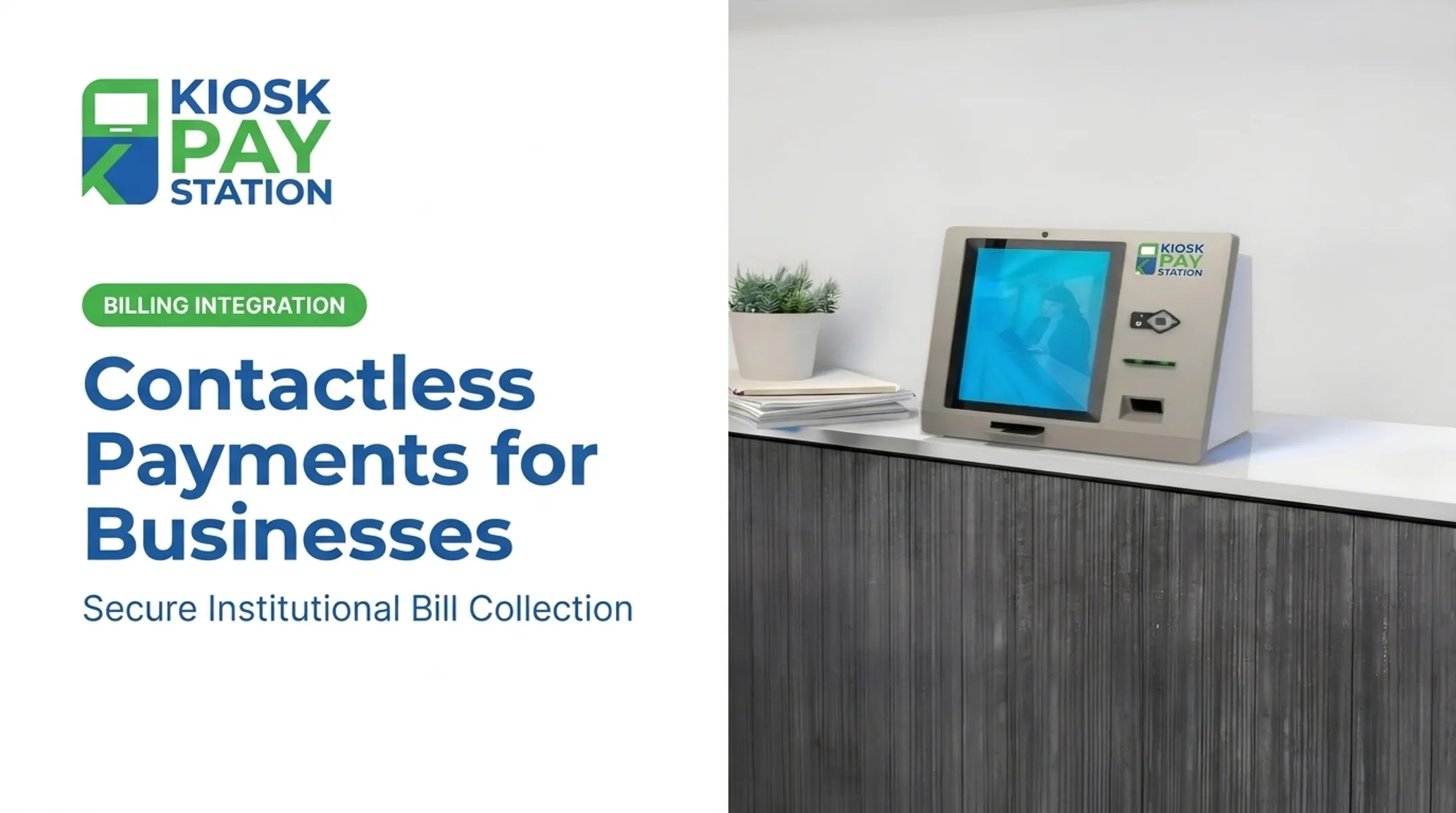
Self-service kiosks can support multiple tender types, including cash, checks, cards, and e-wallets, with availability set by the deploying organization. Not every kiosk, agency, or location offers every method, and not every kiosk runs around the clock. Configuration is always organization-specific.
Designing a Better Convenience-Payment Experience
Good design turns a confusing fee into an expected, understood cost. That starts with clarity:
- Plain-language fee labels, not vague terminology
- Fee disclosure early in the payment flow, not buried at checkout
- A visible total amount before authorization
- Accessible screen flow with multilingual instructions
- Receipts and confirmation numbers for every transaction
- A clear support path if something goes wrong
Convenience isn't just about the moment of payment, either. Account search accuracy, custom identifiers, automated reconciliation, and traceable reporting all need to work together. A fast payment that creates hours of downstream reconciliation work for staff isn't actually a win.
Kiosk Pay Station, part of MyGovBill, applies this model in government and utility bill-payment environments—pairing clear fee UX with multi-method acceptance on PCI-DSS-compliant, EMV-certified rails. Fee policies and configurations are set with the client agency, not preset by the vendor.

Accessibility Isn't Optional
Design choices should account for:
- ADA-oriented physical and digital layouts
- Readable instructions with voice or visual guidance
- Multiple language options
- Privacy protections at the point of payment
- Support for users who can't or don't want to pay digitally
Before launching any self-service channel, test the full journey end to end:
- Locate an account
- View the fee, then cancel or proceed
- Authorize payment and receive confirmation
- Handle an error path
- Reconcile the transaction on the back end
Real-world results vary by channel mix and local volume:
- College Station, Texas: After adding internet and automated phone options, a cash-handling audit found credit and debit use grew while cash and check use declined—without quantifying staffing or queue changes.
- Riverside County: Two self-service kiosks collected over $3 million in tax payments in a week, ahead of eight staffed cashier stations at $2.4 million over the same period.
Treat any single case study as illustrative. Outcomes depend on configuration, adoption, and demand.
Frequently Asked Questions
What is a convenience payment?
A convenience payment is a payment made through an alternative or easier channel, such as online, by phone, or through a self-service kiosk. A convenience fee may apply depending on the provider and applicable rules.
Why am I charged a convenience fee?
Organizations may charge for the cost of maintaining an alternative payment channel or related services. Whether that fee is permitted depends on applicable law, card-network rules, and disclosure requirements.
Which payment method is the most convenient?
It depends on your priorities: total cost, speed, accessibility, accepted tender, confirmation, security, and availability. There's no single "most convenient" answer for everyone.
Are convenience fees and surcharges the same thing?
No. A convenience fee is tied to using an alternative channel, while a surcharge is tied to using a specific payment type, typically a credit card. Check the organization's terminology and applicable rules before assuming either applies.
How can organizations disclose convenience fees clearly?
Disclose the fee early, in plain language, alongside the total amount due and any available alternatives. Allow cancellation before authorization where required, and provide a receipt showing final transaction details.