That gap is closing fast. 77% of U.S. residents expect digital government services to match or beat private-sector digital experiences, according to BCG's 2024 Digital Government Citizen Survey. Digital government transformation is how agencies close that gap.
This article covers what transformation actually means, why it matters, the technologies driving it (including self-service payment kiosks), common roadblocks, and practical best practices.
Key Takeaways
- Agencies replace manual, siloed processes with integrated, citizen-first digital services
- Lower operating costs, faster service delivery, and stronger public trust follow
- Cloud platforms, AI, data-sharing tools, and self-service kiosks are core technology building blocks
- Executive sponsorship, citizen-centric design, and phased rollouts drive lasting results
What Is Digital Government Transformation in the Public Sector?
Digital government transformation is the strategic use of modern technology to redesign how public institutions operate, deliver services, and engage residents. Posting a PDF form online is digitization, not transformation.
There's a real difference between digital optimization and digital transformation:
- Optimization improves an existing process: for example, letting taxpayers upload documents instead of mailing them
- Transformation reinvents the model entirely, such as a tax agency moving from static risk scoring to automated, real-time guidance for filers
Four Types of Government Digital Transformation
- Citizen experience: portals, apps, and kiosks that simplify how residents interact with agencies
- Internal process automation: reducing manual data entry and paper routing
- Workforce and IT modernization: retiring legacy systems and retraining staff
- Data-driven governance: using analytics to inform policy and resource decisions
Core Pillars
Most transformation strategies rest on five pillars:
- Digital platforms
- Citizen identity
- Hybrid cloud
- Secure data sharing
- Total experience (employee plus citizen experience)

Digital governance holds those pillars in place. Digital.gov describes digital governance as the internal systems and processes agencies use to manage their digital presence: who decides what gets built, funded, and maintained.
Why Digital Transformation Matters: Key Drivers and Benefits
Rising Citizen Expectations
Residents compare government services to their banking app or food delivery tracker, not to the DMV they remember from a decade ago. That 77% expectation gap from BCG isn't hypothetical. It shapes how agencies get evaluated by the public they serve.
Cost and Efficiency Gains
Paper processing is expensive. A 2026 TIGTA audit found individual paper tax returns cost the IRS 43 times more to process than e-filed returns, with a per-document differential of $3.17 to $9.91. That's one federal example, but the logic holds across counties, cities, and utilities running paper-heavy workflows.
Better Data, Better Decisions
Real-time data access lets agencies:
- Allocate staff and budget based on actual demand patterns
- Spot service bottlenecks before they become public complaints
- Support policy decisions with current evidence, not annual reports
Transparency and Trust
Opening more processes to public view (application statuses, spending dashboards, permit timelines) builds trust that closed-door bureaucracy erodes. When residents can track a permit or see where fees go, complaint volume drops and voluntary compliance is easier to sustain.
Talent and Workforce Impact
An Accenture study found 8 in 10 respondents believed emerging technology adoption would improve job satisfaction and staff retention. Modern tools help agencies compete for talent, not just serve residents faster.

Key Technologies and Software Powering Government Digital Transformation
Government offices typically run on a mix of:
- Cloud-based case management for permits, licensing, and benefits processing
- ERP and financial systems for budgeting, payroll, and procurement
- Digital forms and CMS platforms for public-facing content and applications
- Citizen relationship management (CRM) tools for tracking service requests
AI, Automation, and Interoperability
AI now handles repetitive work: routing applications, powering chatbots, flagging fraud patterns. NASCIO's 2025 survey of 51 state CIOs found more than 60% had implemented at least one generative AI use case, with 90% reporting active pilots.
Interoperability platforms let departments (for example, a tax office and a permitting office) exchange data securely instead of asking residents to submit the same information twice. Zero trust security frameworks (verify every access request, trust nothing by default) protect this data as more of it moves online.
Self-Service Payment Kiosks: A Practical Digital Transformation Win
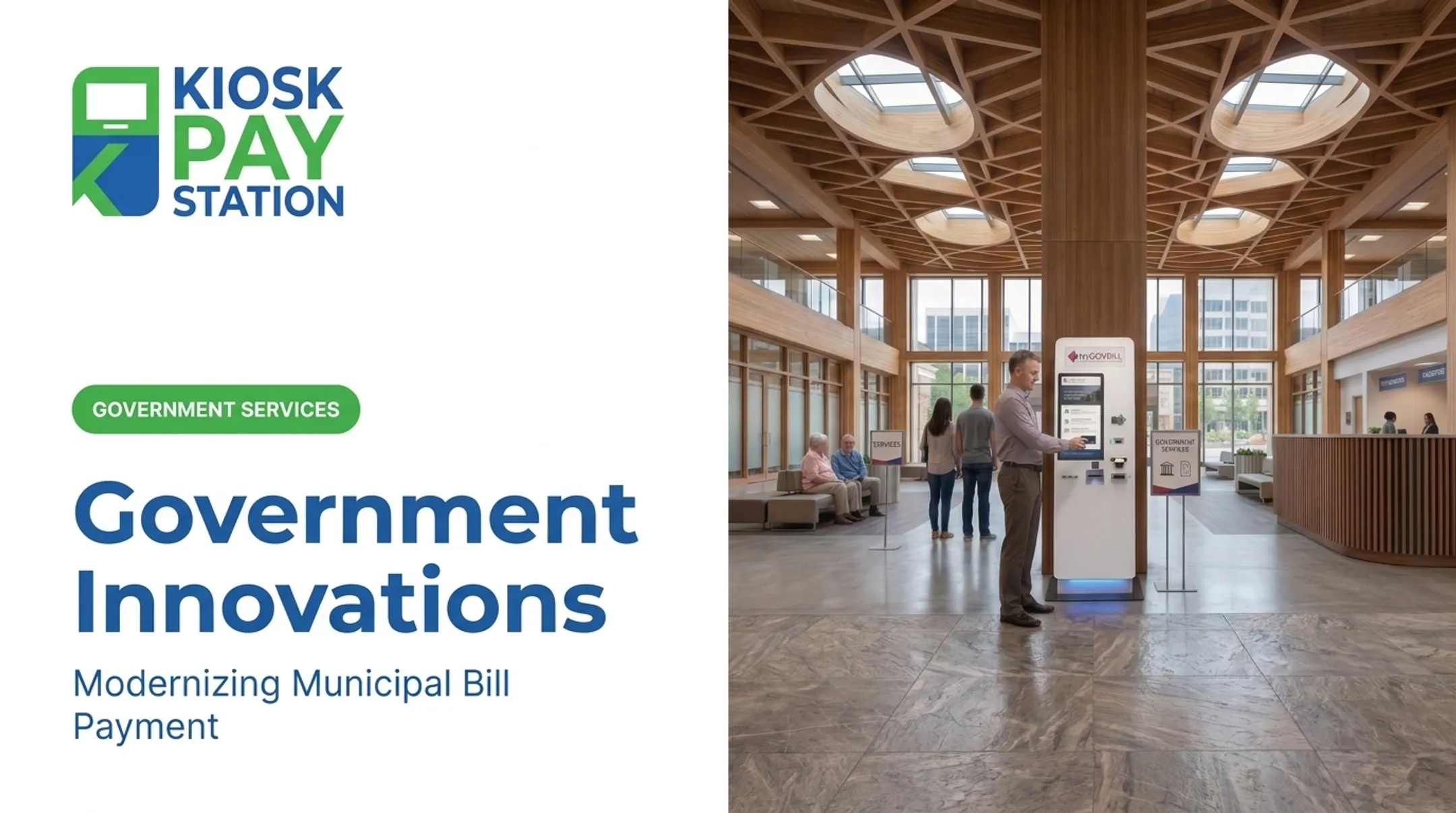
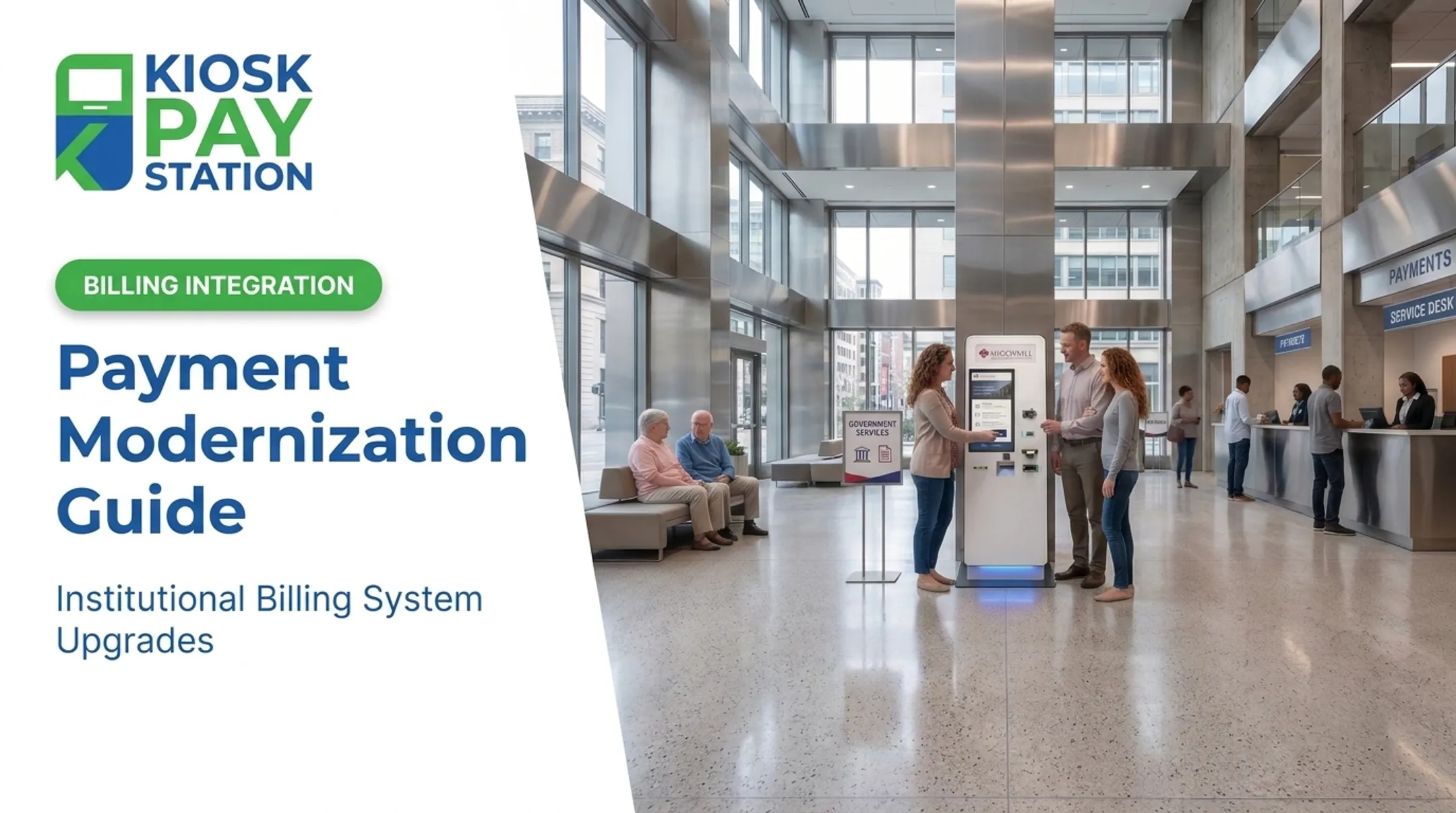
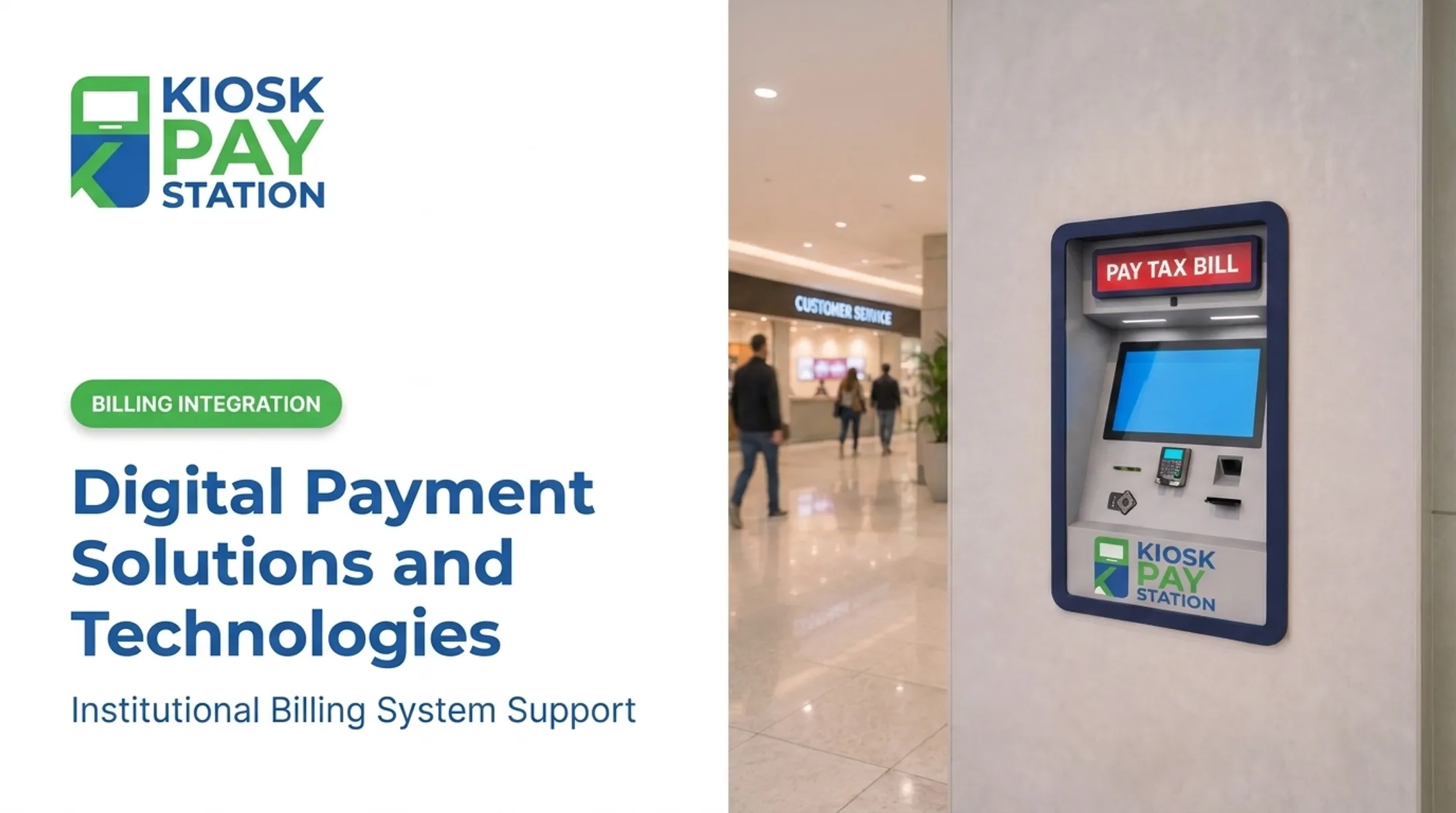
Payment kiosks are one of the most tangible transformation wins agencies can point to. They let residents pay utility bills, court fines, taxes, and permit fees using cash, card, check, or e-wallet — without waiting in line or showing up during business hours.
Modern government payment kiosks are typically PCI-DSS compliant and EMV certified, giving agencies a secure, ADA-accessible way to modernize bill collection while cutting front-counter workload. Common capabilities include:
- Large touchscreens with voice and light guidance
- Multilingual interfaces
- Account lookup by invoice number, QR code, barcode, name, or account number
- Custom data fields for department codes, property IDs, and account references
Providers such as KIOSK PAY STATION support agencies with billing-system integration, monitoring, and ongoing maintenance so payments stay reconciled and compliant.
Riverside County deployed two kiosks that collected over $3 million in seven days — outperforming eight staffed cashier stations, which processed $2.4 million in the same period. More than half of all payments came through the kiosks.
That's not a marginal efficiency gain. That's two machines out-collecting an entire staffed counter operation, freeing employees for higher-value work while giving residents 24/7 payment access.
Common Challenges Agencies Face in Digital Transformation
Even funded transformation programs stall when the same three barriers go unaddressed.
Legacy IT and procurement friction. A 2025 GAO review identified 11 federal legacy systems most in need of modernization, eight of which run on outdated programming languages. Slow, rigid procurement processes make replacing these systems unnecessarily slow.
Budget as expense, not investment. Agencies often treat technology spending as a line item to minimize rather than a strategic lever. This mindset delays upgrades until systems fail outright.
Workforce readiness gaps. A MeriTalk report found 87% of federal agencies say they have only a fraction of the AI knowledge they need. Closing that gap takes structured training and culture change, not new tools alone.
Best Practices for Successful Public Sector Digital Transformation
Programs that stick share a few repeatable practices. Use these as a checklist before you lock scope, vendors, or go-live dates.
- Secure executive sponsorship first. Establish a governance framework that clarifies who owns strategy, execution, and IT enablement before you write a single request for proposal.
- Design around citizens, ship in phases. The HealthCare.gov turnaround is instructive: after the rocky 2013 launch, small agile teams rebuilt in stages—monitoring first, then a scalable login system, then a simpler application. Conversion rates rose from roughly 55% to 85%.
- Partner instead of building from scratch. Agencies rarely hold every skill set in-house. Experienced vendors for cloud migration, billing integration, or payment workflows close gaps faster than hiring alone.
- Choose flexible integration paths. Use real-time or file-based options to connect new tools with existing treasury, court, or utility systems without a disruptive rip-and-replace.
- Measure outcomes, not just deployment. Track conversion rates, processing time, and uptime as explicit goals—HealthCare.gov’s login system hit 99.99% uptime because the team measured it.

Frequently Asked Questions
What is digital transformation in the public sector?
It's the strategic redesign of government operations and service delivery using modern technology, not just digitizing paper forms. It touches policy, workflow, staffing, and data, not just the front-end interface.
What are the main pillars of digital transformation?
The core pillars are digital platforms, citizen identity, hybrid cloud, secure data sharing, and total experience. Together, they form the technical and organizational foundation agencies build on.
What are the main types of digital transformation?
Government transformation typically spans citizen experience, internal process automation, workforce/IT modernization, and data-driven governance. Most agencies work on several simultaneously.
What are digital government services?
These are online portals, self-service kiosks, and digital forms that let residents complete transactions like paying bills or filing permits without visiting an office. They're designed to work outside standard business hours.
What is digital governance?
Digital governance is the set of policies and accountability structures guiding technology decisions across departments. It defines who approves what, and how initiatives stay aligned with agency goals.
What software is commonly used in government offices?
Common categories include case management systems, ERP/financial platforms, content management systems, and payment or kiosk software for bill collection. Most agencies run several of these in parallel.