Digitalization is a shift in how utilities operate, serve customers, and collect revenue. It touches billing, field crews, grid monitoring, and everything between. This article breaks down what digitization and digitalization actually mean, why utilities feel the pressure now, the main technology categories reshaping the sector, and practical steps to start, including self-service payment tools that are changing how utilities collect what they're owed.
Key Takeaways
- Digitization converts formats; digitalization transforms entire workflows and customer experiences
- Aging infrastructure and rising electricity demand are forcing faster utility technology adoption
- Self-service payment kiosks can outperform staffed counters, as Riverside County's results show
- Legacy systems and workforce gaps remain the biggest modernization barriers
- Starting small with a pilot program beats attempting a utility-wide overhaul at once
Digitization vs. Digitalization: Understanding the Difference
These terms get used interchangeably, but they're not the same thing.
Digitization means converting analog information into a digital format without changing the underlying process. Scanning a paper utility bill into a PDF is digitization. Mailing, manual entry, and in-person cash collection stay exactly the same.
Digitalization goes further. The OECD defines it as using digital technologies, data, and interconnection to change how activities actually happen.
Here's a simple utility example:
- Digitization: Scanning paper bills into a database for record-keeping
- Digitalization: Building a self-service payment ecosystem where customers pay by kiosk, app, or portal, with real-time reconciliation and no staff intervention
One preserves the old process in digital form. The other rebuilds the process entirely.
Why Utilities Are Under Pressure to Modernize
Three forces are converging at once, and none of them are slowing down.
Aging Infrastructure Meets Rising Demand
Water utilities face roughly 260,000 main breaks a year across the U.S. and Canada, at about $2.6 billion in annual repairs. A third of all mains are over 50 years old, based on a 2023 USU/AWWA study.
On the power side, the EIA projects electricity demand growing 25%–50% by 2050, driven largely by data centers and EV adoption.
Aging systems, growing load. That combination doesn't fix itself with more staff hours.

Regulatory Pressure Is Building
Federal rules are pushing utilities toward digital systems, not paper workflows:
- EPA CROMERR sets the legal basis for electronic environmental reporting
- 2024 Federal Register notice allows specified Clean Air Act reports through CEDRI/CDX
- NERC CIP standards keep adding grid cybersecurity requirements, with new effective dates through 2026
Customer Expectations Have Shifted
Utility customers now compare their utility's website to their bank's app. JD Power's 2025 study found that 28% of large U.S. utilities have no mobile app at all, and 32% of utility websites failed basic navigation standards. That is a measurable service gap utilities can quantify—and close.
Main Types of Digital Transformation in Utilities
Utility digitalization isn't one initiative. It's several distinct categories, often pursued in parallel.
Grid Modernization and Operational Intelligence
Grid modernization and visibility. Smart meters are already widespread, with about 119 million AMI installations covering 72% of U.S. electric meters, per EIA data. IoT sensors and digital twins extend that visibility further. AWWA documents utilities like Houston Public Works using digital twins fed by SCADA data for real-time pump optimization and leak detection.
AI-driven operational intelligence. Predictive maintenance models flag equipment failure risk before it happens, cutting the reactive "fix it after it breaks" cycle that drains maintenance budgets. Utilities apply the same intelligence layer to load forecasting and outage prediction so dispatchers send crews to the highest-priority work first.

Customer Experience and Workforce Enablement
Customer-facing digital services. This is where most residents interact with modernization directly:
- Self-service web and mobile portals
- Chatbots for routine service requests
- Automated, always-available payment channels
Workforce enablement. Mobile field tools let crews pull up asset history and submit reports from the field instead of paperwork back at the office.
Digital training environments help onboard new hires faster. That urgency is real: Black & Veatch found 68% of water utilities reported increased retirements or departures, with half the sector's workforce potentially retiring within five years.
Cybersecurity, Compliance, and Data Integration
Cybersecurity and compliance tools. NERC CIP standards require categorized cyber-asset protection, incident response planning, and supply-chain risk management. Utilities now meet those rules with digital compliance tracking and continuous monitoring rather than paper audits, especially as OT and IT networks converge.
Data analytics and cloud integration. Black & Veatch's 2025 survey of 680 water-sector stakeholders found 60% have a digital strategy, but 49% collect substantial data without using it effectively. Collected data creates value only when analytics and cloud platforms feed day-to-day operating decisions.
Digitalizing the Customer Payment Experience
Billing and payment collection is one of the most visible places digitalization happens, because customers feel it directly every month.
Extending Access Beyond the Counter
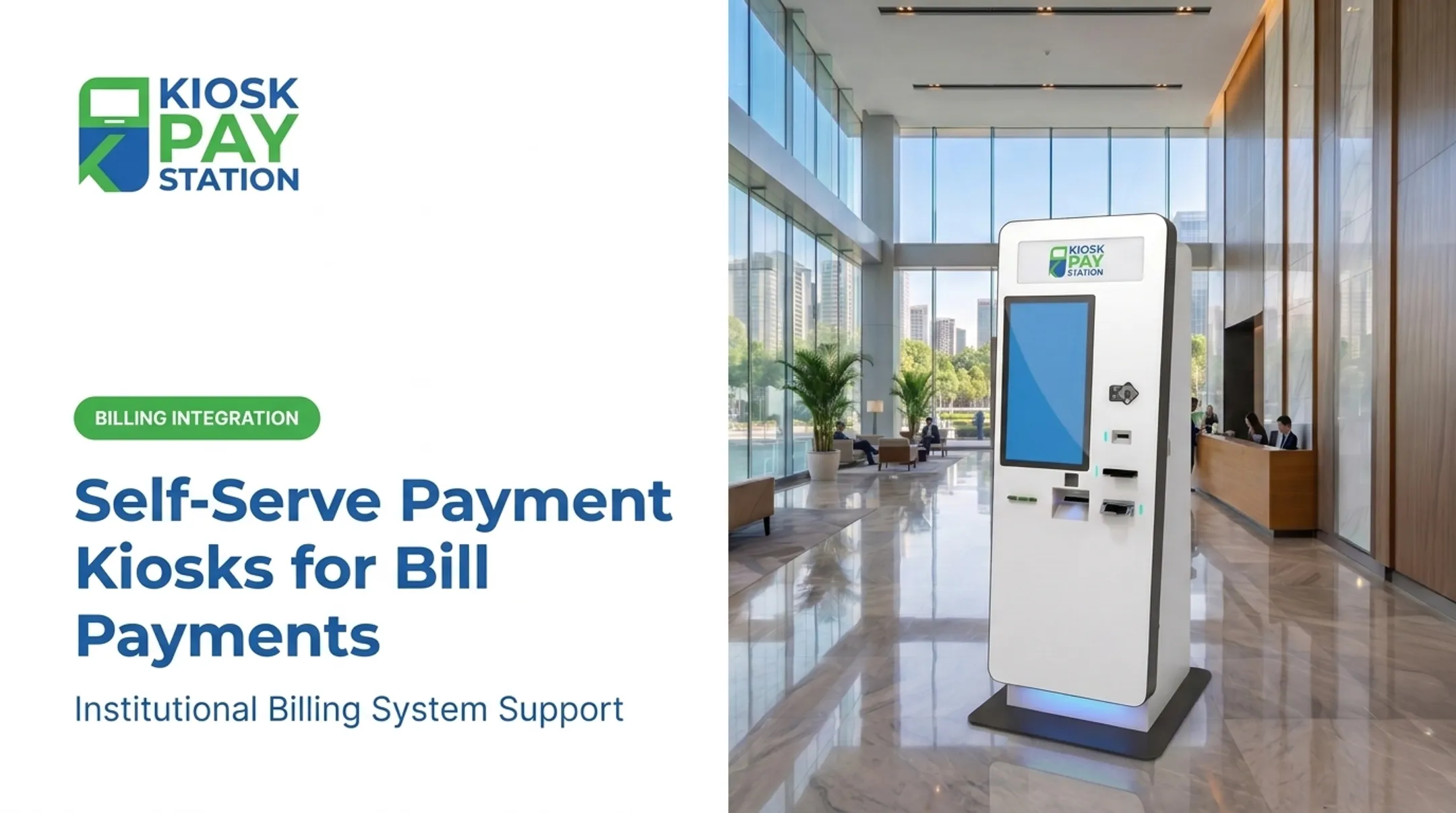
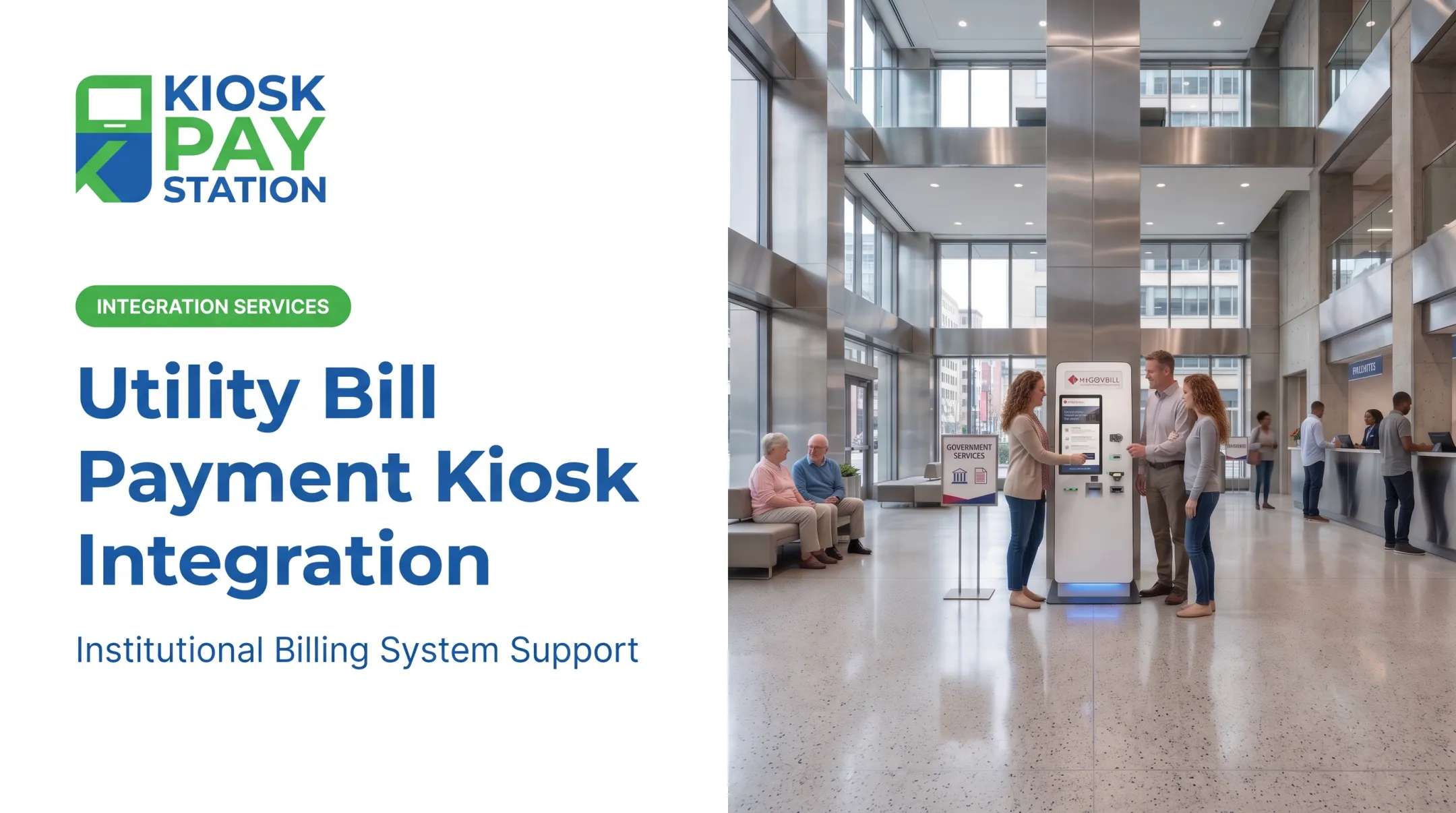
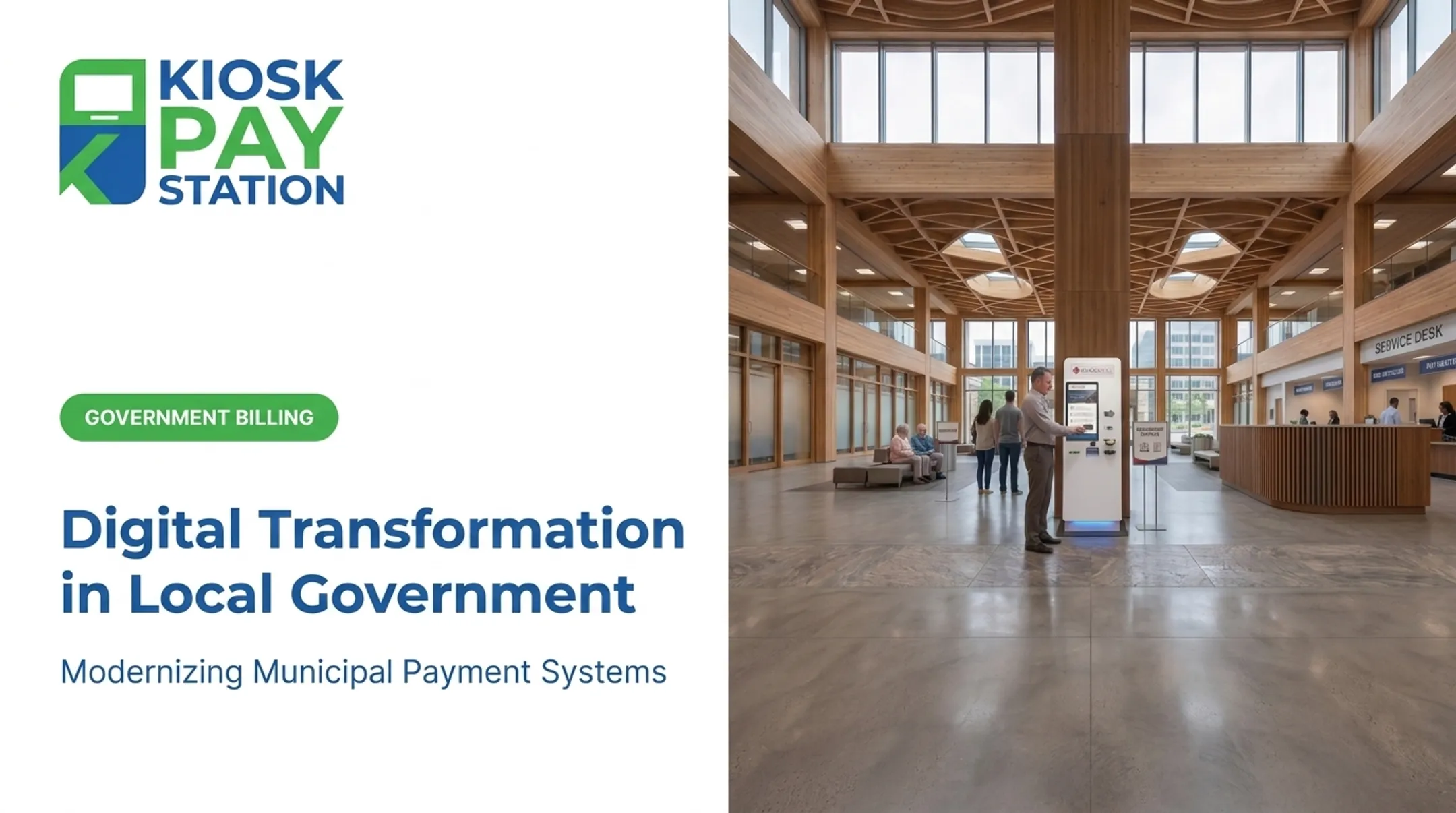
Self-service payment kiosks let residents pay bills outside staffed office hours. Municipalities like Yuma, Arizona and Fort Wayne, Indiana have deployed kiosks to cut wait times and offer 24/7 payment access.
KIOSK PAY STATION, a MyGovBill subsidiary, supports utilities and government agencies with billing-system integration, monitoring, and compliance-focused payment workflows:
- PCI-DSS compliant transaction processing with encrypted payment data
- EMV-certified acceptance for tap, dip, and swipe payments
- Cash, card, check, and e-wallet tender support in integrated workflows
- Automated daily reconciliation with export-ready transaction data
The Riverside County Example
In a seven-day period, two self-service kiosks collected $3,001,000 in tax payments, compared with $2,400,000 processed by eight staffed cashier stations in the same window. Two kiosks took in more than half of total payments—and more volume than eight counters combined.

Utility billing teams see the same pattern: after-hours access and fewer lobby lines move routine collections off the counter so staff can handle exceptions, payment plans, and high-need accounts.
Serving Diverse Constituent Populations
Accessibility matters for public agencies that serve everyone in a community. Government-oriented kiosk interfaces typically include large touchscreens, light-guided instructions, voice prompts, and multilingual navigation.
Under the 2010 ADA Standards, Section 707 covers ATMs and fare machines. Other interactive kiosks often need a separate accessibility review, so agencies should confirm compliance scope for each deployment.
Key Benefits of Digital Transformation for Utilities
The payoffs span operations, customer experience, and risk management.
- Operational efficiency: Automating manual processes, from billing to field reporting, frees staff for higher-value work instead of repetitive data entry.
- Customer satisfaction: J.D. Power found utility mobile apps score 57 points higher than mobile websites and 41 points higher than desktop websites. Convenience translates directly into better experience scores.
- Data visibility: Connected systems support smarter capital planning and simplify regulatory reporting, replacing spreadsheet reconciliation with real-time dashboards.
- Risk reduction: Predictive maintenance catches failures early. Stronger cybersecurity postures, aligned with NERC CIP requirements, protect critical infrastructure from sophisticated threats.
Black & Veatch research found fewer than half of utilities with a digital strategy say they have met most or all of their stated objectives. Results depend on execution, not technology alone.
Common Challenges and Practical Steps to Get Started
Modernization stalls for predictable reasons. Here's how to avoid the usual traps.
The Usual Obstacles
- Legacy systems that don't talk to newer platforms
- Data silos across billing, field ops, and finance departments
- Integration complexity when connecting new tools to decades-old infrastructure
- Workforce skills gaps, worsened by the wave of retirements hitting utilities industry-wide
A Practical Starting Sequence
- Run a pain-point audit — Identify where poor visibility or manual work costs the most, whether that's payment counter congestion or reconciliation delays
- Pilot a scalable tool — Start with one high-impact deployment, such as self-service payment automation or a billing-integration pilot, before expanding utility-wide
- Measure specific outcomes — Track reduced counter transactions, payment processing speed, and reconciliation accuracy
- Expand based on evidence — Let pilot results, not assumptions, guide further investment

This sequencing matters because it limits risk. A focused pilot integrated through real-time, file-based, or non-validated synchronization with existing billing systems gives the utility concrete data before a larger budget commitment.
Frequently Asked Questions
What are the main types of digital transformation in utilities?
Core categories include grid modernization (smart meters, IoT, digital twins), AI-driven predictive maintenance, and customer-facing services such as portals and payment kiosks. Workforce mobile tools and cybersecurity systems round out the typical stack.
What is the difference between digitization and digitalization?
Digitization converts analog information into digital format without changing the process, like scanning a paper bill. Digitalization uses digital technologies to transform the entire workflow, such as automated self-service payments.
Why do utilities need to modernize now?
Aging infrastructure, rising electricity and water demand, tighter regulatory reporting, and customer expectations shaped by banking and retail apps are all pressing utilities at once.
How does self-service technology improve utility bill collection?
Self-service kiosks and portals extend payment access beyond staffed hours, reduce wait times, and lower administrative burden. In seven days, Riverside County's two kiosks collected $3.01 million, outperforming eight staffed cashier stations that processed $2.4 million.
What challenges do utilities face when digitizing operations?
Legacy systems, data silos across departments, integration complexity with existing infrastructure, and workforce skills gaps driven by widespread retirements are the most common barriers.
How can a utility measure ROI from digital transformation?
Track metrics like reduced counter transactions, faster payment processing times, reconciliation accuracy, and reduced unplanned downtime from predictive maintenance tools.